
Every week, we receive an email that begins the same way: “We are in our late 60s / 70s / 80s — is Morocco really right for us?”
The honest answer is: yes, with the right planning, Morocco is one of the most rewarding destinations in the world for older travelers. We have guided retired couples from the United States, families traveling with elderly parents from Europe, and solo senior travelers arriving nervous and leaving transformed. We have seen guests in their 80s ride a camel at sunrise over the Sahara dunes. We have watched an 82-year-old woman sit in a Fes medina courtyard eating couscous with a Moroccan family, tears of joy on her face, saying it was the greatest meal of her life.
But we are also honest guides. Morocco is not a sanitized resort destination. The medinas are cobblestoned. The desert is hot. Some riads have stairs. Knowing what to expect — and how to plan around it — is what separates a magical trip from a difficult one. This guide covers everything a senior traveler needs to know, from accessibility realities to the best cities, the finest experiences, a complete sample itinerary, and every practical detail that matters.
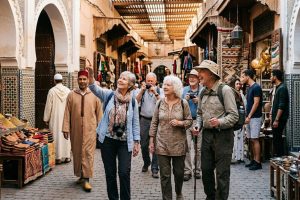
⚡ Morocco for Seniors — Quick Summary
- Overall suitability: Excellent with private tours and good planning
- Best travel style: Private car tour — never group bus tours
- Best months: March–May and September–November (mild weather, comfortable pace)
- Mobility considerations: Medinas have uneven cobblestones — manageable with walking poles and good shoes
- Safety: Morocco is very safe for senior travelers; Moroccan culture deeply respects elders
- Vaccinations: No mandatory vaccinations for Morocco; standard travel health precautions recommended
- Healthcare: Good private hospitals in Casablanca, Marrakech, and Fes; travel insurance essential
- Ideal trip length: 10–14 days for a comfortable, unhurried experience
Why Morocco Is Actually a Wonderful Destination for Senior Travelers
Before addressing the practical challenges — which are real but manageable — it is worth understanding why Morocco works so beautifully for older travelers when the trip is properly planned.
Moroccan Culture Deeply Respects Elders
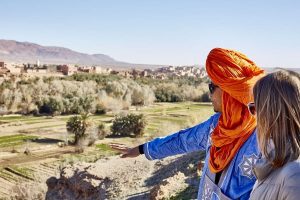
This is not a marketing line. It is a genuine cultural reality that consistently surprises Western visitors. In Moroccan society, older people are treated with deep, instinctive respect. An elderly visitor asking for directions in a Fes medina will often be physically accompanied by a local who takes them to their destination rather than just pointing. Vendors in souks offer chairs to older visitors without being asked. Restaurant owners give the best tables to senior guests. Moroccan families will often invite older foreign travelers to share tea in their homes simply because the cultural impulse toward hospitality toward elders is so deeply ingrained.
This is not something that happens in many destinations. It creates a warmth and ease of experience that older travelers consistently describe as one of the most moving aspects of their Morocco trip.
The Pace Can Be Entirely Yours
Unlike many destinations where group tours dictate a relentless schedule, Morocco on a private tour moves at exactly your pace. Want to spend two hours in a single carpet shop drinking mint tea and hearing the story of how each rug was made? Done. Need a rest after the morning medina walk before the afternoon excursion? Built in. Prefer to skip the camel ride and watch from the camp instead? Absolutely. The private tour model — which we at Days Morocco Tours specialize in exclusively — is the ideal travel format for seniors because every single element is negotiable.
The Sensory Experience Is Extraordinary at Any Age
Morocco engages all five senses simultaneously in a way that few destinations match. The smell of spices in a Fes souk. The sound of the call to prayer echoing between medina walls at dusk. The texture of hand-woven Berber rugs. The taste of a slow-cooked lamb tagine in a mountain village. The sight of the Sahara dunes at golden hour. These experiences do not require physical exertion. They require presence — and that is something that often comes most naturally to travelers who have had a lifetime to learn how to be present.
The Honest Accessibility Assessment: City by City
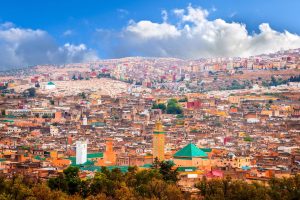
We believe in being direct. Here is the true accessibility picture for Morocco’s main destinations, from the perspective of guides who walk these streets daily:
| City | Accessibility Level | Main Challenge | Senior Verdict |
|---|---|---|---|
| Marrakech | Moderate | Cobblestones, crowded souks | ✅ Excellent — gardens, palaces, riads all accessible |
| Fes | Moderate–Challenging | Steep lanes, very uneven surfaces | ✅ Wonderful with guide — slow pace, essential rest stops |
| Casablanca | Very Good | Modern city — minimal issues | ⭐ Most accessible city — wide pavements, elevators |
| Rabat | Very Good | Small medina, flat modern areas | ⭐ Excellent — calm, navigable, beautiful |
| Chefchaouen | Moderate | Hilly — some steep sections | ✅ Beautiful and manageable — compact, slow-paced |
| Agadir | Excellent | Modern resort city — minimal issues | ⭐ Best base for seniors — flat, modern, beach access |
| Essaouira | Good | Some cobblestones but flat overall | ✅ Wonderful — relaxed atmosphere, flat medina |
| Sahara Desert | Varies | Camel mounting, soft sand | ✅ Possible with proper planning — 4×4 alternative to camel |
🦯 The Cobblestone Reality — Our Honest Advice
Morocco’s ancient medinas are UNESCO World Heritage Sites — which also means they are ancient, irregular, and cobblestoned. This is the single most common concern we hear from senior travelers, and the most honest thing we can say is: it is real, but it is very manageable. A good walking pole or cane makes a significant difference. So does having a guide who walks at your pace, knows which routes have smoother surfaces, and automatically steadies guests on difficult sections. Our guides do this instinctively. We have never had a guest who, with a day’s adaptation, did not find their medina rhythm.
The Best Experiences in Morocco for Senior Travelers
1. A Private Guided Medina Walk in Fes — The Greatest Cultural Immersion in Africa
The medina of Fes el-Bali is a UNESCO World Heritage Site and the world’s largest living medieval city — 9,000 streets, unchanged since the 12th century, home to 150,000 people going about their daily lives exactly as their ancestors did. Walking through it with a knowledgeable private guide, at your own pace, stopping to watch a blacksmith work or a baker slide flatbreads into a wood-fired oven, is one of the most extraordinary cultural experiences available anywhere on earth.
For senior travelers, the key is private guide, slow pace, and strategic routing. A good guide knows which sections of the medina are flatter, which alleys have seating available, and when to pause for the group to rest. The famous Al Qarawiyyin Mosque — founded in 859 AD as the world’s oldest university — can be admired from its exterior gates even for non-Muslims. The Chouara Tannery is best viewed from the rooftop terraces of surrounding leather shops, which involve no difficult access. See our complete guide to Fes, the spiritual city of Morocco for the full picture.
2. The Majorelle Garden in Marrakech — Accessible Beauty at Its Finest
The Majorelle Garden in Marrakech — created by French painter Jacques Majorelle in the 1920s and famously restored by Yves Saint Laurent — is one of the most beautiful and most accessible attractions in Morocco. The paths are smooth and navigable, the garden is compact and completely walkable at a slow pace, and the combination of exotic plants, striking cobalt blue architecture, and absolute tranquility in the middle of a busy city makes it consistently one of the most treasured experiences our senior guests describe afterward. Go at opening time (8am) to avoid the busiest periods.
3. A Sunset Camel Trek or 4×4 Desert Ride in the Sahara
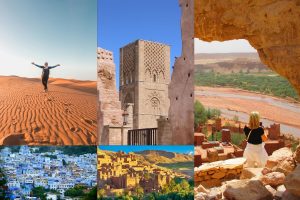
The Sahara at sunset from the back of a camel — or from a comfortable 4×4 vehicle for those who prefer — is one of those travel experiences that no photograph and no description fully prepares you for. The silence. The scale. The colours moving through amber, rose, and deep violet as the sun drops behind the dunes. We have guided guests in their 80s through this experience, and the responses are consistently the same: “It was the most beautiful thing I have ever seen.”
For seniors with mobility concerns, a 4×4 vehicle is a perfectly good alternative to camel mounting — you can drive directly to the best dune viewpoints and watch the sunset from the vehicle or from a portable chair on the sand. Our desert camps are designed with comfort in mind — proper beds, warm blankets, clean bathroom facilities. The 3-day desert expedition from Marrakech is the most popular option for senior travelers wanting the Sahara experience without an exhausting longer journey.
4. A Traditional Moroccan Hammam Experience
A Moroccan hammam — the traditional steam bath — is one of the finest experiences Morocco offers for tired bodies after days of exploration. The process involves a warm steam room, an exfoliating black soap scrub (kessa), and a full body massage. For senior travelers dealing with joint stiffness, muscle fatigue from walking, or simply the accumulated tiredness of travel, a hammam session is genuinely therapeutic. Many riads and hotels have private hammams, which we always recommend for older guests as they offer complete privacy and allow you to go entirely at your own pace.
5. Mint Tea and Tagine in a Riad Courtyard
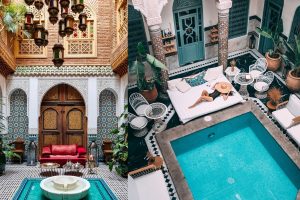
This sounds simple. It is, in fact, one of the most profound experiences Morocco offers. A traditional Moroccan riad — a house built around a central courtyard with a fountain, orange trees, and a silence that feels impossible given the medina street noise just metres away — is the ideal space for the travel rhythm that suits senior visitors best. A long, unhurried lunch of slow-cooked lamb or chicken tagine, fresh bread, and Moroccan salads. Followed by sweet mint tea poured from height with the characteristic Moroccan theatrical flourish. Followed by a rest in the shade. This is Morocco at its most restorative. See our guide to Moroccan food for what to expect and what to order.
6. The Coastal Towns: Essaouira and Agadir
For senior travelers who find the intensity of the ancient medinas tiring, Essaouira and Agadir offer a different and deeply rewarding Moroccan experience. Essaouira’s medina is flat, calm, and less labyrinthine than Fes or Marrakech — its Portuguese-influenced layout has wider streets and a more navigable structure. The harbor, the ramparts, the fish market, and the argan oil cooperatives just outside the city are all accessible and genuinely fascinating. Agadir, Morocco’s purpose-built beach resort city, has wide flat seafront promenades, international hotels with full accessibility features, and a gentle pace that makes it the most stress-free base in Morocco for seniors.
The Best Riad Accommodation for Senior Travelers: What to Look For
Traditional Moroccan riads are beautiful — but some are more senior-friendly than others. Here is exactly what to ask and look for when booking:
- Ground floor room availability: Always request a ground floor room if stairs are a concern. Many riads have at least one or two ground floor options — ask specifically before booking, not on arrival
- Elevator access: Larger riad-hotels in Marrakech and Fes increasingly have small elevators. Ask directly: “Does your property have a lift?” not just “Is it accessible?”
- Bathroom configuration: Request a room with a walk-in shower rather than a bath if getting in and out of a tub is difficult. Most modern riads offer this
- Courtyard access: The best riads for seniors have the courtyard, breakfast area, and at least one bedroom all on the same level
- Location: A riad located near the edge of the medina rather than deep inside it means less walking on uneven surfaces to reach your accommodation
- Air conditioning: Essential for summer months and important even in spring if heat sensitivity is a concern
When you book with us at Days Morocco Tours, we handle all accommodation selection specifically around your mobility and comfort needs — this is one of the most important parts of our planning process for senior guests. Read our full guide to accommodations and where to stay in Morocco for a broader overview.
⚠️ The Riad Staircase Warning
Many traditional riads are tall, narrow buildings with spectacular rooftop terraces — accessed by steep, spiral staircases. The rooftop views are beautiful but the stairs can be genuinely challenging. If you have knee problems, reduced mobility, or difficulty with stairs, always confirm the room you are assigned does not require staircase access before accepting it. A good riad host will accommodate — but you must ask proactively.
Health & Medical Considerations for Senior Travelers in Morocco
Vaccinations
Morocco requires no mandatory vaccinations for entry from Europe, North America, or Australia. However, we recommend consulting your doctor before travel and ensuring the following are up to date: Hepatitis A, Hepatitis B, Typhoid, and Tetanus. These are standard travel health precautions for North Africa. Read our dedicated guide to Morocco healthcare for tourists for full medical preparation advice.
Medications
- Bring all prescription medications in their original labeled containers — Moroccan customs may question unlabeled medications
- Bring more than enough for your entire trip plus a week’s buffer — specific brands may not be available in Morocco
- A letter from your doctor describing your medications and conditions is helpful, particularly for controlled substances
- Keep medications in your hand luggage, never in checked bags
Healthcare Availability
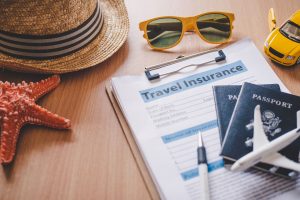
Morocco has good private hospitals in Casablanca, Marrakech, Fes, and Rabat — Casablanca in particular has several clinics meeting international standards. In rural areas and the desert, medical facilities can be hours away. For senior travelers, comprehensive travel insurance with medical evacuation coverage is not optional — it is essential. See our guide to travel insurance for Morocco for what to look for in a policy.
Dietary Needs
Moroccan cuisine is naturally varied and can accommodate most dietary needs with advance notice. However, communicating dietary restrictions in rural areas requires preparation — few small restaurants outside cities have staff who speak English or understand dietary terminology like “gluten-free.” Always inform your tour operator of dietary requirements in detail before your trip, not on arrival. We manage all dietary communications with accommodation and restaurant partners for our senior guests. See our guides to vegetarian food in Morocco and gluten-free options in Morocco.
The Ideal Morocco Itinerary for Seniors: 10 Days, Comfortable Pace
This is the itinerary we most frequently recommend for senior travelers — enough time to experience Morocco’s highlights without rushing, with built-in rest days and flexible stops:
🗓️ Sample 10-Day Senior-Friendly Morocco Itinerary
- Day 1–2: Casablanca — arrive, rest, gentle walk along the Corniche, visit Hassan II Mosque exterior, excellent modern hotel accessibility
- Day 3: Rabat — Morocco’s calm, elegant capital. The Kasbah des Oudayas, Mohammed V Mausoleum, and wide French-era boulevards — all very accessible
- Day 4–5: Fes — private guided medina walk (slow pace), tannery viewing from rooftop terrace, Al Qarawiyyin exterior, long riad lunches with rest time built in
- Day 6: Drive to Merzouga via Midelt — scenic mountain drive with multiple stops, no strenuous activity, arrive at desert camp for sunset
- Day 7: Sahara Desert — sunrise camel trek (or 4×4 alternative), desert camp experience, relaxed mid-morning departure after breakfast
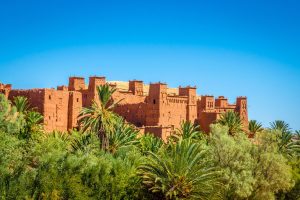
- Day 8: Dades Valley & Ouarzazate — scenic valley drive, kasbah visits, lunch stop in Skoura palm grove — all from the comfort of your private vehicle
- Day 9–10: Marrakech — Majorelle Garden, Bahia Palace, medina souks at gentle pace, farewell dinner in a riad restaurant
All driving days include frequent stops, never more than 3–4 hours of driving at a time. Rest days built in at each destination. Fully adjustable based on energy and preferences.
This itinerary is available as a customized private tour — see our 10-day Morocco trip for the standard version, or contact us directly to build a senior-specific version around your exact needs and pace.
Why Private Tours Are Non-Negotiable for Senior Travelers
This is the single most important piece of advice in this guide: never book a group tour for senior travel in Morocco. Group tours move at the pace of the youngest, most energetic person in the group. They have fixed schedules that cannot accommodate a slower walk, an unplanned rest, or a longer lunch. They load and unload from buses constantly. They do not allow for the spontaneous moments — a longer conversation with a craftsman, an extra hour in a garden, a decision to skip one attraction and rest instead — that make travel genuinely restorative rather than exhausting.
A private tour means your own vehicle, your own guide, and your own schedule. Every stop, every restaurant, every pace is yours. When our senior guests say they need to slow down, we slow down. When they want to spend an extra hour somewhere unexpected, we stay. This is the only format of Morocco travel that genuinely works for older travelers — and it is, fortunately, exactly what we specialize in. See our full range of Morocco private tours for all available itineraries.
What to Pack for Morocco as a Senior Traveler
- Walking poles or a foldable cane: The single most valuable item for senior travelers in Morocco — essential for medina cobblestones and desert sand
- Supportive walking shoes: Closed-toe, with proper ankle support and non-slip soles. Avoid sandals for long medina days — the uneven surfaces require proper footwear
- Compression socks: Helpful for long driving days and flights; reduces leg swelling significantly
- Layers: Mornings and evenings can be cool even when days are warm — a light fleece and a waterproof jacket cover all scenarios
- Sun hat & SPF 50 sunscreen: Morocco sun is intense; sun damage and heat exhaustion are real risks for seniors
- Reusable water bottle: Stay hydrated consistently — dehydration contributes to fatigue, dizziness, and heat-related issues that are more serious for older travelers
- All medications: In original containers, with prescriptions, in hand luggage
- Travel health kit: Rehydration salts, anti-diarrhea tablets, antiseptic wipes, plasters, your usual pain relief
- Modest clothing: Shoulders and knees covered for medina and religious site visits — see our complete Morocco dress guide
- Copies of all documents: Passport, insurance policy, emergency contacts, medication list — in both digital and printed form
Best Time for Senior Travelers to Visit Morocco
The ideal months for senior travel in Morocco are March–May and September–November — the shoulder seasons when temperatures are mild, days are long, and crowds are manageable.
- March–May: Perfect temperatures (18–26°C), landscapes at their greenest, post-Ramadan energy in the medinas. Our top recommendation for seniors
- September–October: Equally excellent. Crowds thin after August, temperatures drop to very comfortable levels, and the autumn light is beautiful across the desert and mountains
- November–February: The desert and Marrakech are warm and wonderful in winter. Northern cities like Fes and Chefchaouen can be cold — pack accordingly
- June–August: We advise senior travelers to avoid inland cities and the desert in peak summer. The coast (Agadir, Essaouira) remains comfortable, but Marrakech at 40°C in July is genuinely taxing for older travelers
🌟 Planning a Morocco Trip for Seniors?
We have been guiding senior travelers through Morocco for over 15 years. We understand the needs, the concerns, and the extraordinary rewards of traveling here later in life. Every detail — accommodation accessibility, daily pace, dietary needs, medical preparedness — is handled for you. Tell us your situation and we will build your perfect Morocco itinerary.
Safety in Morocco for Senior Travelers
Morocco is a very safe country for senior travelers — consistently ranked as one of the safest tourist destinations in Africa and the Arab world. Moroccan culture’s deep respect for older people means that elderly visitors are rarely targeted by the petty scams that can affect younger backpackers. That said, awareness of standard travel safety practices is always worthwhile — read our full Morocco safety guide and our guide to common Morocco scams to avoid.
The most significant safety consideration for senior travelers is not crime — it is health. Heat exhaustion, dehydration, and overexertion on long walking days are the realistic risks. All are entirely preventable with sensible planning: rest in the midday heat, drink water consistently, wear sun protection, and build genuine rest time into every day of your itinerary. This is not a concession to age — it is simply how Moroccans themselves live, and it makes for better travel regardless of years.
Frequently Asked Questions: Morocco for Seniors
Is Morocco safe for elderly travelers?
Yes — Morocco is very safe for senior travelers. Crime against tourists is low, and Moroccan culture’s deep respect for elders means older visitors are treated with particular warmth and consideration. The realistic health risks — heat, dehydration, overexertion — are all preventable with sensible planning and a private tour format that moves at your own pace.
Is Morocco accessible for wheelchair users?
Morocco’s ancient medinas present real challenges for wheelchair users — the narrow, cobblestoned streets were built for pedestrians and donkeys, not modern mobility equipment. However, increasing numbers of accommodations have ground floor rooms and elevators, modern cities like Casablanca and Agadir are significantly more accessible, and specialist accessible tour operators do operate in Morocco. For those with wheelchairs or significant mobility limitations, we recommend contacting us directly to discuss realistic options and build an itinerary around genuinely accessible attractions.
What is the best way for seniors to travel around Morocco?
Without question: a private car tour with a dedicated driver and guide. Group buses are inappropriate for senior travel — they move too fast, have fixed inflexible schedules, and do not accommodate mobility needs. A private vehicle with a knowledgeable guide gives you complete control of pace, stops, and daily structure. It is also the most comfortable and most rewarding way to experience the country for any traveler.
Can seniors do a Sahara desert tour?
Yes — we have guided guests in their 80s through the Sahara experience. The key adaptations: avoid June–August heat entirely; time the camel trek for sunset or sunrise rather than midday; choose 4×4 transport over camel if mounting is a mobility concern; select a quality camp with proper beds, warm blankets, and clean bathroom facilities. The desert at golden hour is one of the most beautiful experiences on earth, and age is no barrier to accessing it with the right planning.
What are the best cities in Morocco for senior travelers?
Agadir and Casablanca are the most accessible due to their modern infrastructure. Marrakech is excellent for senior travelers with its gardens, palaces, and beautifully arranged private riads. Fes is deeply rewarding but requires a knowledgeable guide and a slow pace for its uneven medina streets. Essaouira is wonderful — calm, flat, and culturally rich. Rabat is the most overlooked gem — calm, elegant, and very easy to navigate.
Do I need travel insurance for Morocco as a senior?
Absolutely — comprehensive travel insurance with medical coverage and emergency evacuation is essential for senior travelers in Morocco. Medical facilities in major cities are adequate but limited in rural areas. Ensure your policy covers pre-existing conditions, medical evacuation, and trip cancellation. See our Morocco travel insurance guide for what to look for.
How long should seniors plan to spend in Morocco?
We recommend a minimum of 10 days and ideally 12–14 days for senior travelers. This allows for a genuinely unhurried pace — no more than 3–4 hours of driving on any one day, rest time built into each destination, and the flexibility to stay longer somewhere you love or adjust if energy levels require it. Rushing Morocco defeats the purpose of being there.