In December 2024, the FIFA Congress made it official: the 2030 FIFA World Cup will be co-hosted by Morocco, Spain, and Portugal — across two continents, three countries, and seventeen cities, in a tournament celebrating the 100th anniversary of the greatest sporting event in the world.
For Morocco, this is not just a sporting event. It is the culmination of a journey that began with a failed bid for the 1994 tournament, continued through rejections in 1998, 2006, 2010, and 2026, reached a defining moment in Doha in 2022 when the Atlas Lions became the first African and Arab nation to reach the World Cup semifinal, and now arrives at this: Morocco hosting the world’s biggest tournament on its own soil.
For travelers, the 2030 World Cup represents something even more interesting than the football itself. It represents an opportunity to experience Morocco at a moment of extraordinary transformation and national pride — new infrastructure, new stadiums, a high-speed rail expansion, upgraded airports, and the entire energy of a country that has been building toward this for a generation. Whether you are planning to attend matches or simply want to visit Morocco in the years surrounding the tournament, this guide covers everything you need to know.
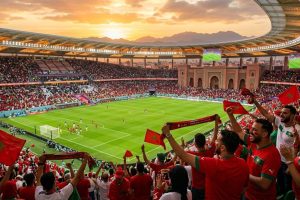
⚡ Morocco 2030 World Cup — Key Facts
- Tournament dates: Summer 2030 (exact schedule to be confirmed by FIFA)
- Co-hosts: Morocco, Spain, Portugal (+ centenary matches in Argentina, Uruguay, Paraguay)
- Morocco host cities: Casablanca, Rabat, Marrakech, Tangier, Fes, Agadir — 6 cities
- Morocco stadiums: 6 venues with combined capacity exceeding 300,000 seats
- Largest stadium: Grand Stade Hassan II, Casablanca — 115,000 capacity, set to be the world’s largest football stadium
- Total Morocco stadium investment: $1.4 billion in stadium construction and renovation
- Total infrastructure investment: Over $6 billion across stadiums, rail, airports, and roads
- Morocco’s World Cup history: First African nation to reach the semifinal (Qatar 2022)
- Bid slogan: “Yalla Vamos 2030” — Moroccan Arabic + Spanish for “Let’s Go”
Why Morocco Co-Hosting the 2030 World Cup Is Historic
The significance of Morocco’s role in the 2030 World Cup cannot be overstated — not for football fans, not for Moroccan people, and not for anyone who follows the development of sport as a global force.
This is the first FIFA World Cup to be held in North Africa. The first on African soil since South Africa 2010. The first ever in Morocco — a country that submitted its sixth consecutive hosting bid before finally being selected. It is the first World Cup held across two continents simultaneously (Europe and Africa). And it coincides with the tournament’s centenary — one hundred years since Uruguay hosted and won the inaugural 1930 World Cup at the Estadio Centenario in Montevideo, a fact that FIFA is celebrating with special centenary matches in South America.
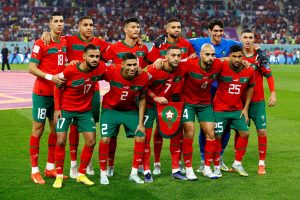
Morocco’s path to this moment carries its own extraordinary weight. At Qatar 2022, the Atlas Lions captured the attention of the world by becoming the first African and Arab team to reach the World Cup semifinal — defeating Spain and Portugal (their future co-hosts) along the way. The image of Moroccan players prostrating in prayer on the Lusail Stadium pitch after each victory, in front of a stadium packed with fans from across the Arab world, became one of the defining images of that tournament. When Morocco eventually lost to France, the response in Moroccan cities was not despair — it was pride. And immediately after: the question of when Morocco would host its own tournament.
The answer, confirmed in December 2024: 2030.
🏆 Morocco’s World Cup Journey: Six Bids, One Dream
- 1994 bid: Lost to USA — Morocco’s first World Cup hosting bid
- 1998 bid: Lost to France
- 2006 bid: Lost to Germany
- 2010 bid: Lost to South Africa
- 2026 bid: Lost to USA/Canada/Mexico joint bid
- 2023: Morocco joins Spain-Portugal bid as co-host — King Mohammed VI announces the partnership
- December 2024: FIFA Congress officially confirms Morocco, Spain and Portugal as 2030 hosts
- 2030: Morocco hosts the World Cup — 36 years after the first bid
Morocco’s 6 Host Cities: Complete Guide
Morocco will host matches across six cities — each one offering a completely different experience for visiting football fans. Morocco will host matches in 6 world-class stadiums across Casablanca, Rabat, Marrakech, Tangier, Agadir, and Fes. Here is everything you need to know about each host city from a traveler’s perspective.
1. Casablanca — The Crown Jewel
Stadium: Grand Stade Hassan II | Capacity: 115,000 (world’s largest football stadium when complete)
Casablanca is Morocco’s commercial capital and its most cosmopolitan city — and it will be the centrepiece of Morocco’s 2030 hosting. The Grand Stade Hassan II is being built in Benslimane, approximately 40 km north of the city centre, on 100 hectares of land between the Atlantic Ocean and the Atlas Mountains. Designed by Paris-based Moroccan architect Tarik Oualalou of OUALALOU + CHOI in collaboration with global stadium specialists Populous, the Grand Stade Hassan II draws inspiration from the “moussem,” a traditional Moroccan social gathering rooted in unity and community.
At 115,000 capacity, it will be the largest football stadium in the world — surpassing the current record holders — and Morocco is expected to bid for it to host the tournament final. The crowning glory of Morocco’s 2030 World Cup preparations, it is a venue for the World Cup final — a flagship stadium, a showstopper, and a future home to two local Moroccan clubs, ensuring the legacy continues after 2030.
What to do in Casablanca beyond the football: The Hassan II Mosque — the largest mosque in Africa, built on a platform over the Atlantic — is one of the most extraordinary buildings in the Islamic world and open to non-Muslim visitors on guided tours. The Art Deco architecture of the city centre, the Corniche waterfront, and the increasingly vibrant restaurant and nightlife scene make Casablanca the most modern and internationally flavoured Moroccan city experience. See our complete guide to Casablanca city.
2. Rabat — The Capital’s Grand Stage
Stadium: Prince Moulay Abdellah Stadium | Capacity: 65,000 (new construction)
Morocco’s elegant capital — a UNESCO World Heritage city with a French colonial ville nouvelle and an ancient medina — gets a brand new stadium built to replace the previous one demolished in 2023. The Prince Moulay Abdellah Stadium will seat 65,000 and is being constructed to the highest FIFA specifications. General view inside the Prince Moulay Abdellah Stadium in Rabat confirms it is taking shape as a world-class venue.
What to do in Rabat beyond the football: Rabat is one of Morocco’s most underrated destinations. The Kasbah des Oudayas — a 12th-century fortress with blue-and-white alleyways overlooking the Atlantic — is as beautiful as Chefchaouen and far less crowded. The Mohammed V Mausoleum, the Roman ruins of Chellah within the city walls, and the relaxed, student-city atmosphere make Rabat an excellent World Cup base with easy train connections to Casablanca.
3. Marrakech — The Iconic Experience
Stadium: Grand Stade de Marrakech | Capacity: 45,000 (expanded and upgraded)
The Grand Stade de Marrakech — currently home to Kawkab Marrakech — will be expanded and fully upgraded to FIFA World Cup standards. Marrakech is Morocco’s most popular tourist city, meaning fans will have no shortage of accommodation options, restaurants, and cultural experiences before and after matches. The famous Jemaa el-Fnaa square, the souks of the medina, and the Majorelle Garden are all within easy reach. Expect Marrakech to be one of the liveliest host cities of the entire tournament.
What to do in Marrakech beyond the football: The question is what not to do. Marrakech is the most complete city in Morocco for tourists — the Jemaa el-Fna square, the Majorelle Garden, the Bahia Palace, the souk labyrinth, the hammams, the rooftop restaurants. Day trips to the Atlas Mountains and Ait Benhaddou are both possible from Marrakech. For football fans, the Jemaa el-Fna in 2030 — packed with fans from 100 nations, the call to prayer mixing with football chants, traditional snake charmers performing beside giant screens — will be genuinely unlike anything else at any World Cup in history.
4. Tangier — The Gateway Between Worlds
Stadium: Ibn Batouta Stadium | Capacity: 65,000
The Ibn Batouta Stadium is already one of the finest in Africa — named after a travelling Moroccan scholar from the 14th century, the Ibn Batouta Stadium hosts 65,000 fans and was the venue for Morocco’s friendly win against Brazil in 2023. It is also the home stadium of IR Tanger. Tangier is uniquely positioned as the city where Africa meets Europe — the Strait of Gibraltar is visible from the hills above the city, and the ferry to Spain departs from the port.
What to do in Tangier beyond the football: Tangier’s literary history — Paul Bowles, William Burroughs, and the Beat Generation lived and wrote here — gives the city a cosmopolitan, slightly bohemian atmosphere unlike anywhere else in Morocco. Cap Spartel, where the Atlantic and Mediterranean meet, the Caves of Hercules, and the beautiful Kasbah Museum above the medina are all essential. Tangier also serves as the natural starting point for visiting Chefchaouen — two hours south in the Rif Mountains — making it an ideal World Cup base for fans who want to combine football with some of Morocco’s most beautiful scenery. See our guide to the grand tour from Tangier.
5. Fes — The Ancient City
Stadium: Grand Stade de Fès | Capacity: 50,000
The Fez Stadium can host both football matches and athletics events, built with a capacity of 45,000 and set to host the 2025 Africa Cup of Nations. It will be expanded to 50,000 for the 2030 World Cup. Fes is Morocco’s spiritual and intellectual capital — the oldest continuously inhabited city in Morocco and home to the world’s oldest university.
What to do in Fes beyond the football: Fes el-Bali — the UNESCO-listed medieval medina — is the greatest urban cultural experience in North Africa. The Chouara Tannery, the Al Qarawiyyin Mosque, the artisan souks, and the extraordinary density of medieval architecture make Fes the most intellectually and culturally rich of Morocco’s host cities. Football fans staying in Fes in 2030 will have the medina and its thousands of years of history as their backdrop — a genuinely extraordinary combination. See our complete guide to Fes, the spiritual city of Morocco.
6. Agadir — The Coastal Wild Card
Stadium: Grand Stade d’Agadir (Adrar Stadium) | Capacity: 70,000 (expanded from current)
Located between the Atlantic Ocean and the Atlas Mountains, Agadir is one of six Moroccan host cities. The Adrar Stadium is set to be expanded to accommodate 70,000 fans by the time of the tournament. Agadir is Morocco’s premier beach resort city — completely rebuilt after a devastating 1960 earthquake, it has wide beaches, modern infrastructure, and the warmest reliably sunny climate of any Moroccan host city.
What to do in Agadir beyond the football: Agadir’s beach and coastal lifestyle is the draw — the long promenade, the fresh seafood restaurants, the surf scene around nearby Taghazout. It is the most relaxed and resort-like of Morocco’s host cities, making it particularly popular with families and those wanting to combine football with a beach holiday. Our guide to things to do in Agadir covers everything the city offers.
| City | Stadium | Capacity | Status |
|---|---|---|---|
| Casablanca | Grand Stade Hassan II | 115,000 🏆 | New construction — under way |
| Tangier | Ibn Batouta Stadium | 65,000 | Existing — upgrades underway |
| Rabat | Prince Moulay Abdellah | 65,000 | New construction replacing demolished stadium |
| Agadir | Grand Stade d’Agadir | 70,000 | Expansion of existing Adrar Stadium |
| Fes | Grand Stade de Fès | 50,000 | Used for AFCON 2025 — World Cup upgrades |
| Marrakech | Grand Stade de Marrakech | 45,000 | Expansion and full FIFA-standard upgrade |
The Grand Stade Hassan II: The World’s Largest Football Stadium
This deserves its own section — because it is genuinely extraordinary.
The Grand Stade Hassan II in Casablanca is not just the largest stadium at the 2030 World Cup. With a record-breaking 115,000 capacity, it is projected to become the largest football stadium in the world — surpassing India’s Narendra Modi Stadium and every other existing football venue on earth. The design, by Moroccan-French architect Tarik Oualalou working with the global stadium specialists Populous, draws on the concept of the traditional Moroccan moussem — a communal gathering that has been part of Berber cultural life for centuries — translated into architectural form at the largest possible scale.
The stadium is being built on 100 hectares of land in El Mansouria, approximately 40 km north of central Casablanca, between the Atlantic coastline and the first foothills of the Atlas Mountains. Beyond the 2030 tournament, it will become the permanent home ground of two Casablanca football clubs — ensuring the venue serves the city long after the World Cup passes. Public financing was locked in late 2023 and groundworks are already underway.
For travelers: the scale of this stadium — when complete — will make it one of the most extraordinary architectural landmarks in Africa. Plan a visit to the construction site or, by 2030, the completed venue as part of any Casablanca itinerary.
Morocco’s New Infrastructure: What’s Being Built for 2030
The World Cup is transforming Morocco’s physical infrastructure in ways that will benefit travelers for decades after the tournament. Morocco will spend $1.4 billion on the six stadiums alone, while total investment across airports, rail, ports, roads, and renewable energy exceeds $6 billion. Here is what is being built:
High-Speed Rail Expansion
Morocco already has Africa’s only high-speed rail line — the Al Boraq service connecting Tangier and Casablanca in just 2 hours 10 minutes (opened 2018). An extension of this high-speed service further south to Agadir and Marrakech is planned as part of the 2030 preparations — a development that will fundamentally change travel times between Morocco’s major cities. When complete, travelers will be able to travel from Tangier to Marrakech by high-speed train in under 4 hours — currently a journey of 7–8 hours by car.
Airport Upgrades
Extensive investment in airports is planned, with some ten Moroccan cities already running direct air links to Europe and many budget airlines offering flights to the kingdom. All six host city airports are receiving expansion and modernization investment to handle the enormous increase in visitor numbers expected for 2030.
Road & Urban Transport
Casablanca’s tram network is being extended. Rabat’s modern tramway already connects the city centre with key destinations. All six host cities are investing in improved connections between city centres and stadiums, including dedicated match-day transport corridors.
The AFCON 2025 Dress Rehearsal
Morocco was not simply waiting to be tested in 2030. In December 2025 through January 2026, Morocco hosted the Africa Cup of Nations (AFCON 2025) — using five of the six World Cup stadiums as a full dress rehearsal for hosting a major international tournament. Morocco’s successful staging of AFCON 2025 means there should be no scepticism about its ability to co-host the World Cup with Portugal and Spain in 2030. Impressive stadiums, easy transportation links, and a well-established tourism infrastructure ensured the 24-team tournament went off without any major hitch and will assuage any doubters about the World Cup in four years time.
This is significant for travelers. It means the infrastructure — stadiums, transport links, accommodation capacity, fan zone organization — has already been tested at scale. The 2030 World Cup is not Morocco’s first major tournament. It is the culmination of a decade of hosting preparation including the 2013 African Nations Championship and 2025 AFCON.
How to Plan Your 2030 World Cup Morocco Trip
The 2030 tournament is still in the future, but planning this far ahead — particularly for accommodation and logistics — is the right approach for any serious World Cup traveler. Here is our guide to thinking about a Morocco 2030 trip:
Choose Your Base City Strategically
Morocco’s six host cities are spread across the country — from Tangier in the north to Agadir in the south, a distance of over 800 km. Unlike smaller World Cups, it is not realistic to attend matches in multiple cities without significant travel time between them. Choose one or two base cities and combine your football with genuine tourism in each location.
Our recommendations by traveler type:
- Culture-focused: Base in Marrakech — the most complete tourism city and likely the liveliest atmosphere of any host city
- Football + history: Base in Fes — the deepest cultural experience combined with a World Cup atmosphere
- Beach + football: Base in Agadir — coastal resort lifestyle with stadium access
- Modern city: Base in Casablanca — home of the world’s largest stadium and Morocco’s most cosmopolitan urban experience
- Gateway travelers: Base in Tangier — easiest connection to Spain by ferry for multi-country World Cup trips
Combine the World Cup with a Morocco Desert Tour
Here is the angle no other World Cup travel guide will tell you: 2030 is an extraordinary opportunity to combine attending the World Cup with a genuine Morocco travel experience — the Sahara desert, the Atlas Mountains, the ancient kasbahs, and the rose valley — as part of the same trip.
A typical 14-day World Cup + Morocco combination could look like this: fly into Casablanca, attend the Hassan II Stadium opening group matches, take the high-speed train to Tangier for a second group match, then spend a week on a private desert tour through the Atlas Mountains, Ait Benhaddou, and the Sahara desert, before returning to Marrakech for the knockout stages and the extraordinary Jemaa el-Fna atmosphere of the later rounds.
This is exactly the type of combined itinerary we specialize in at Days Morocco Tours. Contact us now to start planning — accommodation in Morocco’s World Cup host cities will book out years in advance, and early planning gives you the most options.
Book Accommodation Now — Not in 2029
World Cup host city accommodation books out faster than almost any other event in global tourism. Marrakech — already Morocco’s busiest tourist city — will be under extraordinary demand. Start researching riads and hotels now, even though tournament schedules will not be announced until closer to 2030. At minimum, identify your preferred accommodation and put yourself on waiting lists or make refundable bookings well ahead. Read our guide to accommodation in Morocco for tips on choosing between riads, hotels, and guesthouses in each host city.
⚽ Planning a Morocco 2030 World Cup Trip?
We are a Berber family based in Morocco, guiding travelers through this country for over 15 years. We know every host city intimately — the best accommodation, the finest local restaurants, the cultural experiences that make Morocco more than just a football destination. Start planning your 2030 trip with us now — early is the only strategy that works for a World Cup.
What to Expect as a Football Fan in Morocco
Moroccan Football Culture
Moroccans are among the most passionate football fans in Africa — and the Qatar 2022 semifinal run proved to the world what the country already knew. Football is discussed in every cafe, debated in every market, and watched on every screen. The atmosphere around the Atlas Lions national team is extraordinary. In 2030, playing on home soil for the first time in a World Cup, Morocco’s matches will generate an atmosphere that may rival anything experienced at any previous World Cup. The combination of Spanish, Portuguese, and Moroccan fan cultures across the tournament will be entirely unlike any previous edition of the competition.
Safety & Security
Morocco is one of the safest countries in North Africa and the Arab world for international visitors. The country has hosted major international events continuously and has well-established security infrastructure for large sporting events, tested most recently by AFCON 2025. Read our Morocco safety guide for general visitor security information.
Food & Fan Experience
The World Cup fan experience in Morocco will extend far beyond the stadiums. Every host city will have official FIFA fan zones. The Jemaa el-Fna square in Marrakech — already the most extraordinary public gathering space in Africa — will become an informal global fan village during the tournament. Moroccan food — tagine, couscous, pastilla, fresh orange juice, Moroccan mint tea — will be an integral part of the experience for visiting fans. The combination of world-class football, ancient culture, and extraordinary food makes Morocco 2030 an unparalleled World Cup destination.
Currency & Costs
Morocco uses the Moroccan Dirham (MAD). During the World Cup, demand will significantly inflate accommodation costs in host cities — budget and plan accordingly. For general Morocco trip cost guidance, see our complete Morocco trip cost breakdown. The Moroccan currency guide covers everything you need to know about money during your visit.
Frequently Asked Questions: Morocco 2030 World Cup
Which cities in Morocco will host the 2030 World Cup?
Morocco will host World Cup matches in six cities: Casablanca, Rabat, Marrakech, Tangier, Fes, and Agadir. Each city has a dedicated stadium being built or upgraded to FIFA World Cup standards. Casablanca’s Grand Stade Hassan II, with a planned capacity of 115,000, is expected to be the largest football stadium in the world and Morocco’s flagship 2030 venue.
Who are the co-hosts of the 2030 FIFA World Cup?
The 2030 FIFA World Cup is co-hosted by Morocco, Spain, and Portugal — three countries across two continents (Africa and Europe), connected by the Mediterranean Sea and the Strait of Gibraltar. Three special centenary matches celebrating the 100th anniversary of the first World Cup will also be held in Argentina, Uruguay, and Paraguay. The tournament was confirmed by FIFA’s Extraordinary Congress in December 2024.
What is the Grand Stade Hassan II?
The Grand Stade Hassan II is Morocco’s flagship 2030 World Cup stadium, currently under construction in Benslimane near Casablanca. With a planned capacity of 115,000, it is designed to be the largest football stadium in the world. Designed by Moroccan-French architect Tarik Oualalou, its design draws inspiration from the traditional Moroccan moussem — a communal gathering ritual. Morocco hopes it will be selected to host the tournament final.
Is Morocco ready to host the World Cup?
Yes. Morocco’s successful hosting of the 2025 Africa Cup of Nations — using five of the six World Cup venues — demonstrated its capacity to organize a major international football tournament at scale. Investment of over $6 billion in infrastructure (stadiums, airports, rail, roads) is underway. Morocco’s tourism infrastructure — already handling millions of international visitors annually — is well-established and expanding. The Al Boraq high-speed train already connects Tangier and Casablanca; extensions to Marrakech and Agadir are planned.
Can I visit Morocco now before the 2030 World Cup?
Absolutely — and we recommend it. Morocco is an extraordinary travel destination right now, without the World Cup crowds. The same stadiums being built for 2030 can be visited during construction. The host cities — Marrakech, Fes, Tangier, Casablanca, Rabat, and Agadir — are all exceptional travel destinations today, with the added interest of seeing Morocco’s transformation in progress. See our full range of Morocco private tours for ways to experience the country now.
What makes Morocco different as a World Cup host?
Several things are genuinely unique: it is the first World Cup held in North Africa. It is the first on African soil since South Africa 2010. The combination of ancient medina cities (Fes, Marrakech), Atlantic coast venues (Casablanca, Agadir), and the extraordinary cultural richness of Morocco means fans attending this World Cup have a tourist experience available to them that no previous tournament location has offered. The 2022 semifinal run of the Atlas Lions also ensures that Morocco — hosting on home soil — will bring an atmosphere of intense national passion to every match.
How do I get tickets for the 2030 World Cup?
Tickets will be sold through FIFA’s official ticketing platform — fifa.com. Ticket sales typically open in phases starting 2–3 years before the tournament. Register on FIFA’s official platform early to be notified when ticket sales open. Avoid third-party resellers — official FIFA tickets are the only legitimate route and unofficial tickets are frequently fraudulent.