Seven days in Morocco. It sounds like a tight window for a country this vast, this layered, this relentlessly alive. And in some ways it is — Morocco rewards longer stays generously, and anyone who spends two weeks here will tell you they wished they had three. But here is the truth we have learned from 15 years of guiding: a well-planned seven days in Morocco delivers more genuine travel experience per hour than almost any other destination on earth.
In one week, you can walk the 12th-century lanes of a UNESCO-listed medina, cross the highest mountain pass in North Africa, stand inside a Saharan desert camp watching the stars appear one by one above the dunes, drink mint tea with a Berber family in a mountain village, and eat the greatest tagine of your life in a riad courtyard while a fountain splashes in the dark. You can do all of this. If the route is right.
The route is everything. Most first-time Morocco travelers make the same mistake: they try to see too much. They add Chefchaouen, Essaouira, Casablanca, and three extra cities to an already full week and end up spending more time in a vehicle than in the places they came to see. The best 7-day Morocco itinerary is the one that does less, but does it properly.
We have designed two routes below — the Classic Marrakech Loop that most travelers take, and the North-to-South route for those flying into Casablanca. Both are built around the same principle: genuine experience over distance covered.
⚡ Morocco 7-Day Itinerary — Key Facts
- Best route: Marrakech → Atlas Mountains → Ait Benhaddou → Dades Valley → Merzouga (Sahara) → Fes
- Total driving distance: Approximately 1,050 km over 7 days
- Transport: Private car strongly recommended — public transport cannot cover this route efficiently
- Best months: March–May and September–November for perfect weather throughout
- Budget (on the ground): $400–$550 budget / $900–$1,400 mid-range / $1,800–$3,000 private guided tour (per person)
- First-timer friendly: Yes — this is the most popular Morocco route for a reason
- Highlights: Sahara camel trek, Ait Benhaddou kasbah, Todra Gorge, Fes medina, Tichka Pass
Before You Start: The One Rule That Makes or Breaks a 7-Day Morocco Trip
Read this before you plan a single day. It is the most important thing in this guide.
Do not try to see everything.
Morocco is the size of France. It has six UNESCO World Heritage Sites, four imperial cities, a Sahara desert, three mountain ranges, and an Atlantic coastline. Travelers who try to fit Marrakech, Fes, Chefchaouen, Essaouira, Casablanca, and the desert into seven days do not experience any of them — they drive through all of them. They see the surface of each place from a moving window and arrive home exhausted, having photographed everything and absorbed nothing.
The itinerary below is designed differently. It covers the three most essential Morocco experiences — the imperial city atmosphere of Marrakech and Fes, the dramatic mountain and valley landscape of the south, and the Sahara desert — and it gives each of them enough time to actually land. Some days have only one or two planned activities. This is intentional. The unplanned hours in Morocco — the conversation that starts over mint tea, the souk alley you wander into by accident, the sunset you did not expect — are consistently what travelers remember most.
🗺️ The Classic 7-Day Route at a Glance
Day 1: Arrive Marrakech — settle in, first medina evening
Day 2: Marrakech in full — gardens, palace, souks, Jemaa el-Fna
Day 3: Marrakech → Tichka Pass → Ait Benhaddou → Dades Valley
Day 4: Dades Valley → Todra Gorge → Merzouga (Sahara)
Day 5: Sahara sunrise → Camel trek → Drive toward Fes (Ifrane stop)
Day 6: Fes — full medina day, tanneries, Al Qarawiyyin
Day 7: Fes morning → depart or continue journey
Day 1: Arrive in Marrakech — The City That Hits You First
Arrive in Marrakech. Check into your riad. Put your bags down. And then go outside immediately, even if you are tired from the flight. The first evening in Marrakech is something you remember for the rest of your life and you do not want to sleep through it.
Walk toward Jemaa el-Fna square. At sunset, this is the most extraordinary public square in the world — a chaos of snake charmers, orange juice vendors, musicians playing gnaoua rhythms on krakeb castanets, storytellers addressing crowds in Darija Arabic, steam rising from dozens of food stalls, and the minaret of the Koutoubia Mosque turning gold in the late light behind it all. Do not try to understand it. Just stand in the middle of it and breathe.
Have dinner at one of the food stalls on the square — the famous Jemaa el-Fna night market. Order harira soup, kefta meatballs, and fresh orange juice. It costs almost nothing and it is magnificent. Go to bed early. Tomorrow is a full day.
Where to stay: A riad inside or at the edge of the medina. Book directly with the riad rather than through a platform for better rates — see our Morocco accommodation guide for how to choose. Budget: $25–$40. Mid-range: $60–$120. Comfortable: $100–$200.
🧭 Day 1 Insider Tip
Take a photograph of your riad’s street sign, the nearest named lane, and the riad’s phone number before you leave for the evening. Marrakech’s medina is genuinely labyrinthine and finding your riad in the dark without a reference is the most common first-night stress. Your riad host will also give you a hand-drawn map — keep it in your pocket. After one day you will know the neighbourhood by instinct, but the first evening requires a navigation plan.
Day 2: Marrakech — Gardens, Palaces & the Souk Labyrinth
Today is your full Marrakech day. Wake early and walk to the Majorelle Garden at opening time — 8am. The garden at this hour, before tour groups arrive, is one of the most serene and visually extraordinary places in Morocco: cobalt blue buildings, tropical plants in vivid greens and yellows, the sound of water, the smell of wet earth. Spend 45 minutes here and then walk to the nearby Yves Saint Laurent Museum if design interests you.
Mid-morning: the Bahia Palace. Built in the late 19th century by the Grand Vizier of Marrakech as the most beautiful home in the world — he came close. The painted cedar ceilings, the carved stucco walls, and the succession of private courtyards give the clearest sense of Moroccan palace architecture you will find anywhere accessible to visitors.
Lunch at a riad restaurant near the Bahia — ask your guide or riad host for their personal recommendation. Avoid the tourist restaurants with photos on laminated menus outside. The best Moroccan food is always served behind an unmarked door.
Afternoon: the souks. The medina of Marrakech is divided into artisan quarters — the leather souk, the spice souk, the carpet souk, the lantern makers, the blacksmiths. Walk through all of them. Get lost deliberately. Allow yourself to be pulled into a carpet shop by a charming vendor — drink the mint tea, watch the rugs unfurl, and know that you can leave without buying anything and that this is entirely acceptable. See our guide to bargaining in Morocco so you know how to handle souk negotiations confidently.
Evening: return to Jemaa el-Fna at sunset for round two. Tonight, climb to a rooftop cafe overlooking the square and watch the whole spectacle from above with a pot of mint tea. The aerial view reveals patterns in the chaos that are invisible from ground level.
Day 3: Marrakech → Tichka Pass → Ait Benhaddou → Dades Valley
Depart Marrakech early — 7:30am at the latest. Today is a long driving day, but every kilometre is extraordinary.
The first two hours take you over the Tizi n’Tichka Pass — the highest road pass in North Africa at 2,260 metres (7,415 feet). The drive is extraordinary: switchbacks climbing through Atlas Mountain villages, views across snow-capped peaks (in winter and spring), traditional Berber settlements of pink-red mud-brick houses clinging to impossible hillsides. Stop at any of the natural viewpoints along the pass. The perspective from the top — Morocco’s heartland stretching in every direction — is genuinely humbling.
The descent from the pass brings you into the pre-Saharan landscape: ochre and red, increasingly arid, the vegetation changing from Atlas cedar to dry scrub. Within 30 minutes of leaving the pass you feel as though you have entered a different country.
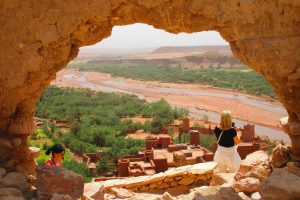
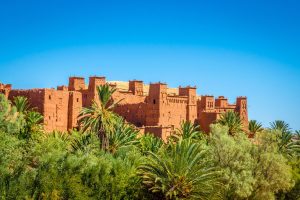
Late morning: Ait Benhaddou. This UNESCO World Heritage Site — a fortified clay kasbah village rising above the Ounila River — is the most cinematically beautiful place in Morocco. It has been used as a film set for Gladiator, Game of Thrones, Lawrence of Arabia, and dozens of others because it looks precisely like an ancient kingdom brought to life. Cross the river by stepping stones or the footbridge and climb through the kasbah to the top granary for the finest view of the surrounding desert valley. Allow 1.5–2 hours. See our full guide to Ouarzazate and its surroundings for what else this region offers.
Continue east through the Draa Valley toward the Dades Valley — the road passes through a landscape of palm groves, rose bush fields (famous in April–May), and a succession of ancient kasbahs. Arrive in the Dades Valley late afternoon. Dinner and overnight in a valley guesthouse with views of the Dades Gorge cliffs turning amber in the last light. See our guide to the Valley of Roses if you are traveling in late April–May.
Driving time today: Approximately 5 hours. Distance: 320 km.
⚠️ Motion Sickness Warning: The Tichka Pass
The Tizi n’Tichka Pass involves intense switchback mountain driving. Anyone prone to motion sickness should take appropriate medication the night before and sit in the front seat. Eating a light breakfast before the pass is also advisable. The views are worth every hairpin bend — but prepare your body for it.
Day 4: Todra Gorge → Merzouga — Arriving at the Sahara
Today is the day that first-time Morocco visitors almost universally describe as the most extraordinary of their trip. It is also the longest driving day — plan for 6–7 hours total including stops.
Begin with the Todra Gorge. Depart your Dades Valley guesthouse by 8am and drive 45 minutes east to the entrance of the Todra — a canyon where 300-metre walls of orange-red rock squeeze to just 10 metres apart at their narrowest point, with a clear cold river running between them fed by Atlas snowmelt. Walk into the gorge on foot. The light at this hour filters down from far above in shafts and the air is surprisingly cool and fresh. Rock climbers can often be seen on the vertical faces above. Allow 45 minutes to an hour.
Continue east through the Ziz Valley — arguably the most underrated drive in Morocco. The road descends through a dramatic gorge into a vast palm grove oasis stretching for kilometres, then enters the pre-Saharan hammada (rocky desert) as the landscape gradually opens and flattens toward the dunes. The transition from rocky gorge to palm oasis to open desert over 2–3 hours of driving tells the geological history of this region in a way no book can.
Arrive in Merzouga late afternoon. Check into your desert camp or guesthouse. And then: the camel trek to the Erg Chebbi dunes for sunset.
The Erg Chebbi dunes rise to 150 metres — among the highest dunes in the Sahara. The camel trek to the camp takes approximately 45 minutes to an hour. The sunset from the dune ridge, with the dunes turning from gold to copper to deep violet as the light falls, is one of those travel moments that changes a person’s relationship with landscape permanently. Dinner at camp — tagine, bread, Berber tea around a fire. Traditional music from the camp musicians. And then: the stars. Merzouga sits far from any significant light pollution and the Milky Way on a clear night is visible as a physical structure overhead, not just a smear of light. Sleep in the desert.
Driving time today: Approximately 3.5 hours driving plus stops. Distance: 160 km.
🐪 Desert Camp: What to Bring for the Night
- Warm layers: Desert nights drop to 10–15°C even in summer — a warm jacket and socks are non-negotiable
- Headtorch / phone torch: The camp is not brightly lit at night
- Closed shoes for sand: Sandals sink uncomfortably in the soft dune sand
- Camera with fully charged battery: The sunrise from the dunes the next morning is something you will want to capture
- Earplugs: Some camps have thin walls between tents — other guests’ early wake-ups can disturb
- Cash for tips: The camp staff and camel handlers deserve 50–100 MAD each
Day 5: Sahara Sunrise → Drive to Fes (via Midelt)
Wake at 5:30am. This is not optional. The Sahara sunrise is worth every second of lost sleep.
Walk or ride the camel back to the dune ridge before dawn. Watch the sky transition from deep blue-black through purple, pink, and finally the extraordinary gold of a desert sunrise. The dunes catch the first light on their crests and the shadows in the valleys deepen dramatically. The air is perfectly still and cold. The silence is absolute except for the sand shifting under your feet. This is the moment most travelers have in mind when they say they want to go to the Sahara. It is exactly as extraordinary as they imagined — and then slightly more.
Return to camp for a full Moroccan breakfast. Depart Merzouga by 9am for the long drive north to Fes.
The Merzouga to Fes drive takes approximately 6.5–7 hours. Break it with a stop in Midelt — a small town at 1,500 metres altitude in the Middle Atlas that functions as a welcome cool-air rest stop. The restaurants around the main square serve excellent harira soup and mechoui (slow-roasted lamb). Continue north through cedar forests where Barbary macaques — the only wild primates in Africa north of the Sahara — can often be seen at the roadside near Azrou. Stop briefly and watch them. They are extraordinarily characterful animals.
Arrive Fes early evening. Check into your riad inside the medina. Walk briefly into the old city before dinner — just enough to feel the ancient weight of the place, the narrow alleys, the medieval light, the sound of prayer calls from a hundred minarets. You will explore it properly tomorrow.
Driving time today: Approximately 6.5–7 hours. Distance: 480 km. Longest day of the trip — worth it to wake up in Fes.
Day 6: Fes — The Deepest Day of the Trip
Fes el-Bali is the world’s largest living medieval city — 9,000 streets, unchanged in structure since the 12th century, home to 150,000 people going about their lives in ways their ancestors would recognize. It is also genuinely disorienting without a guide: the medina is not laid out on any comprehensible grid, and solo wanderers reliably get lost for hours. On a 7-day itinerary with only one Fes day, a knowledgeable guide is not optional — it is the difference between experiencing the medina and merely surviving it.
Begin at the Chouara Tannery in the morning. This is Morocco’s most iconic image — the circular stone vats of the leather tannery, visible from the rooftop terraces of surrounding leather shops, filled with natural dyes in whites, reds, yellows, and the famous saffron yellow. Workers stand knee-deep in the vats treading leather with bare feet, using a process unchanged since the 11th century. The smell is significant — the shops provide sprigs of mint to hold under your nose. Go in the morning when the light is best and the colours most vivid. See our full guide to Fes, the spiritual city of Morocco.
Walk to the Al Qarawiyyin Mosque — founded in 859 AD as the world’s oldest continuously operating university. Non-Muslims cannot enter but the carved wooden gates and the sound of students reciting within give a powerful sense of the institution’s continuing life. Stand outside and listen.
Continue through the artisan quarters: the brass and copper souk (Seffarine square, where metalworkers hammer trays and teapots with medieval tools against a soundtrack of ringing metal), the woodwork souk (carved cedar furniture and architectural elements), the weavers quarter (traditional Fes silk fabric still woven by hand on ancient looms). These are not tourist displays — they are working crafts districts where production has happened continuously for centuries.
Late afternoon: climb to the Borj Nord — a Portuguese-era fortress above the medina — for the finest panoramic view of Fes el-Bali. The sight of the medina from above, a sea of green-tiled rooftops, minarets, and satellite dishes packed into a valley with no visible boundary, is one of the great cityscapes of the world. Best in the golden hour before sunset.
Evening: dinner inside the medina — a full traditional Moroccan meal with pastilla (the extraordinary sweet-savoury pigeon pie that is Fes’s signature dish), tagine, and fresh bread. The riad restaurants of Fes are some of the finest in the country. Read our guide to Moroccan food for what to order and why.
Day 7: Fes Morning — Then Onward or Home
Your final morning. Use it for whatever felt incomplete yesterday — a second walk through a favourite medina quarter, a return to the tannery with fresh eyes, or simply a long breakfast in your riad courtyard with one last pot of Moroccan mint tea.
If departing: Fes has an international airport with connections to major European cities. Alternatively, a private transfer or train connects Fes to Casablanca in 4 hours for intercontinental departures.
If continuing your Morocco journey: Fes is the natural starting point for the north Morocco circuit — Meknes, Volubilis, Chefchaouen, and Tangier. See our 7-day odyssey from Fes for the full northern route, or our 10-day Morocco trip if you want to extend this classic itinerary into a fuller experience.
Alternative Route: 7 Days Starting in Casablanca
If flying into Casablanca rather than Marrakech, this adjusted route works seamlessly:
- Day 1: Casablanca arrival → Hassan II Mosque exterior (the largest mosque in Africa — non-Muslims can tour the interior) → drive to Rabat (45 min)
- Day 2: Rabat — Kasbah des Oudayas, Mohammed V Mausoleum, the calm elegant ville nouvelle. Drive to Fes (3 hours)
- Day 3: Fes medina — tanneries, Al Qarawiyyin, souk quarter. Drive toward Midelt and the south (stay Midelt or Erfoud)
- Day 4: Merzouga — arrive midday, sunset camel trek, night at desert camp
- Day 5: Sahara sunrise → drive via Todra Gorge → Dades Valley overnight
- Day 6: Ait Benhaddou → Tichka Pass → Marrakech
- Day 7: Marrakech morning — Majorelle Garden, souks — depart from Marrakech airport
This route covers the same essential Morocco highlights in reverse direction and works equally well. The advantage: you see Fes fresh (before travel fatigue sets in) and end in Marrakech — the most lively final-night city in Morocco. See our tours from Casablanca for custom itinerary options from this starting point.
What to Pack for 7-day Morocco itinerary
- Layers for all temperatures: Marrakech can be 35°C while the Tichka Pass is 15°C and the Sahara night is 10°C — all in the same 24-hour period. Pack a full range
- Comfortable walking shoes: Medina cobblestones require proper footwear — sandals are insufficient for long walking days
- Modest clothing: Shoulders and knees covered for medinas and mosques — lightweight linen works for both modesty and heat. Read our Morocco dress guide
- Sun protection: SPF 50 sunscreen, wide-brim hat, quality sunglasses — the desert and mountain sun is extremely intense
- Desert night warm layer: A fleece or light down jacket specifically for the Sahara camp night — this surprises more travelers than any other preparation gap
- Small daypack: For day explorations — leave luggage at the accommodation
- Cash in Dirhams: Withdraw on arrival — see our cash guide for Morocco
- Reusable water bottle: Essential — 2–3 litres per day minimum in the desert and when hiking
- Motion sickness tablets: For the Tichka Pass and mountain roads — even non-sufferers find these useful as a precaution on very winding sections
The Best Morocco Tours for This 7-Day Route
This classic Marrakech-Desert-Fes circuit is the most popular private tour we offer and the one we know best from years of refinement. It is available as:
- Classic 7-day private tour from Marrakech: Top 7-day trip from Marrakech — covers everything in this guide with a private vehicle, English-speaking guide, and hand-picked riads
- 5-day condensed version (Marrakech to Fes): 5-day Fes to Marrakech tour — the same core route at a faster pace
- From Fes southward: 7-day odyssey from Fes — starts in Fes and heads south to the desert before returning via the valley route
- Extended 10-day version: 10-day Morocco trip — adds Chefchaouen and the north for travelers who want to extend this classic route
🐪 Ready to Book Your 7-Day Morocco Trip?
We are a Berber family with 15+ years of private guiding experience on this exact route. Every detail — riads, meals, desert camp, guide, pace — is handled for you. Tell us your travel dates and group size and we will build your perfect week in Morocco.
Budget Breakdown: 7-Day Morocco Trip
| Category | Budget ($) | Mid-Range ($) | Private Tour ($) |
|---|---|---|---|
| Accommodation (7 nights) | $120–$180 | $300–$550 | $500–$900 |
| Food (7 days) | $80–$120 | $150–$280 | Included in tour |
| Transport (private car/bus) | $60–$100 | $200–$350 | Included in tour |
| Desert camp + camel | $50–$80 | $80–$150 | Included in tour |
| Activities & entrance fees | $30–$50 | $60–$100 | Included in tour |
| Shopping + tips | $50–$100 | $100–$200 | $150–$300 |
| Total (per person) | $390–$630 | $890–$1,630 | $1,400–$2,500 |
For the full breakdown by category, read our complete Morocco trip cost guide.
Frequently Asked Questions: Morocco 7-Day Itinerary
Is 7 days enough to see Morocco?
Seven days is enough to experience Morocco’s essential highlights — Marrakech, the Sahara desert, the mountain landscapes, and Fes — at a satisfying pace. It is not enough to see everything the country offers, but no amount of time is. The key is choosing the right route for seven days and resisting the temptation to add too many stops. A well-planned week in Morocco delivers more genuine travel depth than two rushed weeks trying to cover every city.
What is the best Morocco itinerary for 7 days?
The classic Marrakech → Ait Benhaddou → Dades Valley → Todra Gorge → Merzouga (Sahara) → Fes route is the best 7-day Morocco itinerary for first-time visitors. It combines the country’s two greatest imperial cities with the dramatic landscapes of the south — mountain passes, gorges, desert dunes — in a logical, manageable circuit. The reverse direction (Fes to Marrakech) works equally well.
Do I need a guide for a 7-day Morocco trip?
Not strictly necessary for the cities — Marrakech and Fes can both be explored independently, though a local guide significantly enriches the Fes medina experience specifically. For the Marrakech-to-desert-to-Fes route, a private guide with a vehicle is strongly recommended: the destinations are spread across over 1,000 km and public transport cannot connect them efficiently. The stops along the way — Tichka Pass, Ait Benhaddou, Todra Gorge — require a vehicle to reach. See all our Morocco private tour options.
What is the best month for a 7-day Morocco trip?
March to May and September to November offer the ideal conditions for this route: comfortable temperatures throughout (mild in the cities, warm in the desert, cool in the mountains), long days, and manageable crowd levels. Avoid the Sahara in June–August when temperatures exceed 45°C. December–February is excellent for the cities and desert but cold in the Atlas Mountains and Fes at night. See our best time to visit Morocco guide for full seasonal detail.
How much does a 7-day Morocco trip cost?
On the ground (excluding flights), a 7-day Morocco trip costs approximately $400–$630 per person on a budget, $900–$1,600 mid-range, and $1,400–$2,500 per person as part of a comfortable private guided tour. See our complete Morocco trip cost breakdown for full category-by-category figures.
Can I do this itinerary without a car?
The Marrakech–Sahara–Fes route cannot be completed efficiently on public transport. Buses serve city-to-city routes but do not reach Ait Benhaddou, Todra Gorge, or the desert camps near Merzouga directly. Options without a private vehicle: book a 3-day organized desert tour from Marrakech for the middle section and handle the cities independently by bus and train; or book a full private tour that includes vehicle throughout. See our guide to car hire in Morocco if you prefer to self-drive.
Should I start in Marrakech or Fes?
Both work equally well. Starting in Marrakech and ending in Fes is the most common direction and allows you to build energy toward Fes’s intensity after the more tourist-friendly environment of Marrakech. Starting in Fes and ending in Marrakech works well for those arriving via northern European connections or Casablanca and wanting to end in Morocco’s most vibrant city for a final night. The landscapes on both directions are equally spectacular.