How to Book a Desert Tour in Morocco: standing at the base of the Erg Chebbi dunes at dusk, watching the light turn the sand from amber to deep crimson, hearing nothing except wind, you understand exactly why people come so far for this. The Sahara desert in Morocco is not just a tourist attraction. It is one of the most genuinely transformative landscapes on earth. And the difference between an experience that moves you and one that disappoints you almost entirely comes down to how — and from whom — you book it.
This guide tells you everything: the different types of desert tours available, what they cost, what is and isn’t included, how to spot a trustworthy operator, the best time to go, and exactly how to book — whether from home or once you arrive in Morocco.
⚡ Morocco Desert Tour — Essential Facts for 2026
- Main desert destination: Merzouga (Erg Chebbi) — the classic. Zagora for shorter trips
- Distance from Marrakech: ~560 km to Merzouga (~7–8 hours driving)
- Shortest desert tour: 2 days / 1 night (from Marrakech, shared transport)
- Most popular format: 3 days / 2 nights — best balance of value and experience
- Shared tour cost range: $80–180 per person (3-day/2-night)
- Private tour cost range: $250–600+ per person depending on group size and accommodation
- Best booking method: Direct with operator (not OTAs) for best price and accuracy
- Best months to go: October–April (avoid June–August heat)
Step 1: Choose Your Desert Destination — Merzouga or Zagora?
The first decision when booking a Morocco desert tour is which desert you are going to. Many first-time visitors don’t realise there are two main options, and they are very different experiences.
Merzouga (Erg Chebbi) — The Iconic Sahara
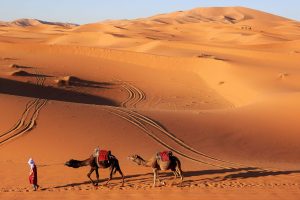
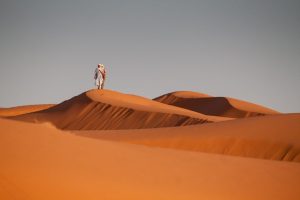
Merzouga is what most people picture when they imagine the Moroccan desert: towering orange sand dunes rising up to 150 metres from a flat plain, camel caravans silhouetted against a sunset sky, and Tuareg-style camps at the dune base. Erg Chebbi is the most dramatic and photogenic desert landscape in Morocco, and it is the destination we recommend for anyone who wants the full Sahara experience. It takes approximately 7–8 hours to drive from Marrakech, which is why most tours run for 3 days minimum. See our full Merzouga desert guide for everything you need to know about this extraordinary place.
Zagora — Closer but Different
Zagora is approximately 4–5 hours from Marrakech, making it accessible for a 2-day tour from the city. The desert here is the Draa Valley’s palm-fringed pre-Saharan landscape rather than the towering dunes of Erg Chebbi — it is beautiful and atmospheric, but the dunes are smaller and the landscape less dramatic. Zagora is a good choice if your time in Morocco is limited and you want a taste of desert life. For anyone who can spare three days, Merzouga is the far superior choice. Read our guide to Zagora city to compare.
Step 2: Choose Your Tour Type
Morocco desert tours come in three distinct formats. Understanding the difference before you book will save you both money and disappointment.
Shared Group Tours
Shared tours join you with a group of other travellers — usually between 6 and 16 people — in a shared minibus. They follow a fixed route, fixed schedule, and fixed stops. The price is the lowest available — typically $80–180 per person for a 3-day/2-night shared tour from Marrakech. The trade-off is flexibility: you stop when the driver stops, you stay where the group stays, and you travel at the pace the itinerary dictates.
Shared tours are excellent for solo travellers or couples on a budget who are comfortable with a group dynamic and a structured schedule. They are the format used by the majority of backpackers and budget travellers visiting the Sahara. See our guide to the top shared Morocco desert tours for recommended options.
Private Tours
Private tours give you your own vehicle, your own driver-guide, and a fully customisable itinerary. Want to spend three hours at the Dades Gorge instead of 45 minutes? Done. Want to take the longer route through Skoura’s palm grove? No problem. Want to upgrade your desert camp to a luxury tent with an en-suite bathroom and private terrace? Arrange it in advance and it is yours.
Private tours from Marrakech to Merzouga and back typically cost $250–600 per person depending on group size, accommodation choices, and inclusions. For groups of 4 or more, private tours become remarkably cost-competitive with shared tours while delivering an incomparably better experience. The group tours vs private tours comparison guide breaks down the full cost analysis.
Self-Drive Desert Tours
Experienced drivers with a higher tolerance for adventure sometimes choose to self-drive to Merzouga, booking a camp separately on arrival or in advance. The road from Marrakech to Merzouga is fully paved — no 4×4 required — and the route via Ait Benhaddou, Boumalne Dades, and Todra Gorge is one of Morocco’s most spectacular drives. The downside is that you miss the local knowledge and story behind every landscape that a good guide provides. See our full Morocco road trip guide if self-drive is your preference.

Step 3: Understand What Should Be Included
One of the most common booking mistakes is comparing tours on price alone without checking what each price actually includes. Here is what a legitimate, properly-priced Morocco desert tour should cover:
✅ What Should Be Included in a Morocco Desert Tour
- Private or shared transport for the full duration (air-conditioned vehicle)
- English-speaking licensed driver-guide throughout
- All accommodation listed in the itinerary (hotel + desert camp)
- Camel trek to the desert camp (sunset and/or sunrise)
- Overnight stay in a desert camp with dinner and breakfast included
- All entrance fees to sites on the itinerary (Ait Benhaddou, etc.)
- Bottled water during transport
❌ What Is Usually NOT Included
- Flights or travel to/from the starting city
- Lunches and dinners other than at the desert camp
- Personal travel insurance (always buy separately — see our Morocco travel insurance guide)
- Tips for the guide and camel handler (10–20% is standard and appreciated)
- Sandboarding, quad biking, or other optional desert activities
If a tour price seems dramatically lower than the range above, look carefully at what has been removed from the inclusions list. The most common omission is the desert camp night itself — some budget tours list “desert experience” but deliver only a camel ride and return, with no overnight stay. Always read the inclusions line by line before paying.
Step 4: Spot a Legitimate Operator vs. a Scam
The Morocco desert tour market includes excellent, family-run operators alongside a minority of dishonest ones. The scams in Morocco guide covers this in detail, but the key red flags specific to desert tour bookings are:
- No physical address or verifiable location. Any legitimate tour operator has a registered office, a verifiable address, and real contact details. A Facebook page with no website and no address is a significant warning sign.
- Prices dramatically below the market range. A 3-day/2-night private tour from Marrakech to Merzouga for $80 per person is mathematically impossible to deliver at proper quality — fuel alone costs more than that. If a price seems unreal, it is.
- Pressure to pay cash in full before departure. Legitimate operators typically take a 20–30% deposit to confirm, with the balance paid on the day. Full upfront payment in cash to someone you have not verified is a risk.
- No verifiable reviews. Check TripAdvisor, Google Reviews, and travel forums independently. A pattern of reviews from accounts created in the same week is a sign of fake reviews. Look for detailed, specific reviews from verified travellers.
- No clear cancellation policy. A professional operator always has a written cancellation and refund policy. “No refunds” from a stranger is not acceptable.
The safest approach is to book with an operator who has a documented track record, a real website with content, and verifiable reviews across multiple platforms. Family-run Moroccan operators with local expertise and a genuine personal investment in their reputation consistently outperform large booking platforms where guides are anonymous contractors.

Step 5: Choose Your Desert Camp Level
Desert camps in Morocco vary enormously — from basic communal tents to genuinely luxurious private pavilions with en-suite bathrooms, proper beds, electricity, and heated blankets for winter nights. Choosing the right camp level is as important as choosing the right tour operator.
Standard / Budget Camps
Communal Berber tents with shared bathroom facilities (often basic outdoor facilities or a simple bloc). Mattresses on the floor, shared dinner around a communal fire, traditional music from a drum and guembri. This is the format used by most shared tours, and it is genuinely atmospheric — the simplicity is part of the experience. Cost for the camp night is typically included in shared tour prices.
Mid-Range Camps
Semi-private or private tents with proper beds (raised off the ground), shared or semi-private bathrooms, better quality dinner, and a slightly smaller group atmosphere. A good mid-range camp delivers 90% of the luxury camp experience at around half the price. Most private tours in the $300–450 range use mid-range camps.
Luxury Desert Camps
Private tents with en-suite bathrooms, real beds with quality linen, electricity for charging, private terraces, multi-course dinners, and professional service. Some luxury camps also offer private plunge pools, spa treatments, and stargazing telescope access. These experiences are extraordinary — and priced accordingly, typically $200–400 per person per night for the camp alone. Our guide to the 10 best camps in Merzouga’s Sahara covers the full range with honest assessments of each.
Step 6: Decide When to Go
Timing your Morocco desert tour correctly makes a significant difference to your experience. The Sahara is a year-round destination but the conditions vary dramatically.
- October–November: Excellent. Warm days (25–30°C), cool evenings, still relatively uncrowded before Christmas peak season. One of the best periods.
- December–February: Beautiful clear skies, spectacular stargazing, and genuine cold at night (temperatures can drop to 2–5°C). Bring warm layers for the camp. Magical atmosphere, especially around New Year — see our New Year in the Sahara guide.
- March–April: Arguably the best months. Warm but not hot, wildflowers in the pre-Saharan valleys, the Valley of Roses in bloom in April, and manageable crowds.
- May: Still pleasant. Temperatures beginning to rise but the desert is often spectacular with good light. Read our Morocco in May guide for what to expect.
- June–August: Avoid unless heat is your preference. Daytime temperatures in Merzouga regularly exceed 45°C. The camel trek and dune walking are genuinely exhausting and potentially dangerous in high summer. Most experienced travellers avoid these months entirely.
- September: Transitional — temperatures beginning to drop from summer highs. Late September is usually pleasant. Our best time to visit Morocco guide covers the full seasonal breakdown.
Step 7: Book in the Right Order
The optimal booking sequence for a Morocco desert tour from home is:
- Book flights to Morocco first — either to Marrakech (most common starting point for southern desert tours) or Casablanca. See our flights to Morocco guide for airline options and price timing.
- Research and contact 2–3 tour operators directly — email them your dates, group size, budget range, and preferred camp level. A quality operator responds within 24 hours with a detailed, specific proposal.
- Compare proposals line by line — not just the headline price. Check inclusions, accommodation quality, and what happens if the itinerary needs to change.
- Pay the deposit to confirm your booking — typically 20–30% via bank transfer or PayPal. Keep your receipt and confirmation email.
- Purchase travel insurance separately — this is non-negotiable. Desert tours involve outdoor activities and remote locations; insurance covering cancellation, medical evacuation, and lost luggage is essential.
- Arrange any extra experiences you want — sandboarding, quad biking, a visit to a Gnawa music ceremony, a cooking class in Marrakech before or after. The best operators help arrange all of this.
🐪 Ready to Book Your Morocco Desert Tour?
We are a Berber family from southern Morocco with 15 years of experience organising private and group desert tours. Tell us your dates, group size, and budget — we will build your perfect Sahara experience.
How Much Does a Morocco Desert Tour Cost? Real 2026 Prices
Here is an honest breakdown of what real Morocco desert tours cost in 2026. These are market prices — not promotional rates — based on actual departures from Marrakech to Merzouga (Erg Chebbi) with reputable operators:
🏷️ Morocco Desert Tour Price Guide (Per Person, Marrakech to Merzouga)
- 2-day/1-night shared tour: $60–100 pp (basic camp, shared minibus)
- 3-day/2-night shared tour: $80–160 pp (standard camp, shared minibus)
- 3-day/2-night private tour, standard camp: $200–320 pp (group of 2–4)
- 3-day/2-night private tour, mid-range camp: $280–420 pp (group of 2–4)
- 3-day/2-night private tour, luxury camp: $420–700 pp (group of 2–4)
- 5-day private tour (full south circuit): $380–800 pp depending on accommodation
For a complete cost breakdown including what you will spend on meals, tips, and extras, see our full Morocco trip cost guide.
What Happens on a 3-Day Desert Tour: Day by Day
To give you a concrete sense of what you are booking, here is what a well-run 3-day/2-night private tour from Marrakech to Merzouga typically looks like:
Day 1 — Marrakech to Ait Benhaddou to Dades Valley (~280 km)
Depart Marrakech early morning (7–8am) heading south via the N9. Cross the Tizi n’Tichka pass at 2,260 metres — North Africa’s highest paved mountain road — with a stop at the summit for photos and the breathtaking view. Descend to Ait Benhaddou, the UNESCO World Heritage ksar and filming location for Gladiator, Lawrence of Arabia, and Game of Thrones. Allow 1.5–2 hours to explore on foot. Continue east via Ouarzazate — Morocco’s “Hollywood of Africa” — and stop for lunch in a local restaurant. Arrive in the Dades Valley in the late afternoon. Explore the Dades Gorge’s extraordinary Monkey Fingers rock formations at golden hour. Overnight in a gorge-view guesthouse or riad.
Day 2 — Dades Valley to Merzouga (~200 km)
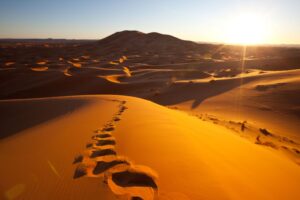
Morning: drive 30 minutes to the Todra Gorge — 300-metre limestone walls narrowing to a 10-metre slot with a cold river running between them. Walk the main gorge section on foot (no hike required — it is a flat, easy walk through the canyon). Continue east through the date palm oases of the Ziz Valley — one of the most beautiful valley drives in Morocco. Lunch in Erfoud (Morocco’s fossil capital — stop at a fossil workshop to see how Morocco’s ancient marine fossils become art and furniture). Arrive in Merzouga in the late afternoon. Mount your camel and ride 45 minutes into the dunes to your desert camp as the sun sets behind the mountains. Dinner under a sky of approximately 2,000 visible stars. Traditional Gnawa music around the fire. Sleep in your tent to the sound of silence.
Day 3 — Desert Sunrise, then Return to Marrakech via the Road of 1000 Kasbahs
Wake at 5:30am for the Sahara sunrise from the dune top — this is the moment the entire trip has been building toward. Breakfast in camp, then camel back to Merzouga. Drive west on the N10 — the Road of a Thousand Kasbahs — through Tinerhir, Boumalne Dades, Kalaa M’Gouna, and the extraordinary Skoura palm grove. This return route is as beautiful as the outbound journey: a continuous procession of ancient clay kasbahs rising from the red valley floor against a vast blue sky. Arrive back in Marrakech by late evening.

Tips from Local Experts: What Most Guides Won’t Tell You
- Book directly with your operator, not through aggregator platforms. Platforms like Viator and GetYourGuide add 20–30% commission that comes either out of the operator’s margin (reducing quality) or out of your pocket. Going direct means better price and a direct relationship with the people responsible for your experience.
- Always ask who your driver-guide will be — not just the company name. The quality of a desert tour is almost entirely determined by the knowledge, personality, and honesty of the guide. Ask for a guide biography before confirming.
- Bring cash in Moroccan Dirhams (MAD). Desert camps, local restaurants, and shops in remote areas are cash-only. ATMs become scarce east of Ouarzazate. Our cash guide for Morocco covers exactly how much to carry and where to exchange.
- Pack layers, not just light clothes. Desert nights — even in April and October — can drop to 10–15°C. Winter nights drop below freezing. The temperature swing between midday and midnight in the Sahara is one of the largest on earth. Our Morocco packing list has a full desert-specific packing section.
- Protect your phone and camera from sand. Wind is common in the dunes. A sealable bag for your electronics while on camelback is worth the 50 cents it costs.
- Tip your camel handler. The camel driver who walks alongside you through the dunes typically earns very little from the tour price itself. 50–100 MAD ($5–10) is appropriate and genuinely appreciated.
Frequently Asked Questions: How to Book a Desert Tour in Morocco
How far in advance should I book a Morocco desert tour?
For shared tours in shoulder season, 1–2 weeks in advance is usually sufficient. For private tours, 4–6 weeks gives you the best choice of guide, accommodation, and flexibility. During peak periods — Christmas, New Year, Easter, and the Rose Festival in April — popular camps and private guides book out months in advance. Book as early as possible if your travel dates fall in these windows.
Is a Morocco desert tour safe?
Yes. Morocco’s Sahara region is one of the country’s safest areas for tourism. The roads are well-maintained, the local communities depend on tourism and are genuinely welcoming to visitors, and the risk of any security incident is extremely low. Standard travel safety practices apply — don’t carry large amounts of cash visibly, stay with your guide in unfamiliar areas, and keep your tour operator informed of your itinerary. Read our full safety in Morocco guide.
What should I wear on a camel trek in the desert?
Loose, long-sleeved clothing that covers your arms and legs protects against sun and sand. Closed shoes or trainers (sandals on a camel are uncomfortable and impractical). A scarf or shemagh to wrap your head and face is strongly recommended — your guide will carry traditional ones and show you how to wrap it. Sunglasses with UV protection are essential. See the full Morocco dress guide for women-specific advice.
Can I book a Morocco desert tour as a solo traveller?
Absolutely. Shared tours are particularly well-suited to solo travellers — they are a natural way to meet other visitors from around the world, and the group dynamic in a desert camp is often one of the highlights people remember most vividly. Solo travellers on private tours pay a single supplement (typically $50–100 extra) because the vehicle and guide costs are not shared. Our solo travel Morocco guide covers everything you need to know.
Can I book a desert tour once I arrive in Morocco?
Yes — particularly for shared tours, last-minute booking in Marrakech’s medina is entirely possible. However, the operators who approach tourists on the street outside Jemaa el-Fnaa are rarely the best choice. Better to contact operators online before you travel, or to ask your riad for a trusted, vetted recommendation. Last-minute private tour bookings are possible but your choice of guide and camp will be limited to whoever is available.
Is a camel ride to the desert camp comfortable?
For most people, the camel trek to camp takes 45–60 minutes — comfortable enough for the vast majority of travellers, including older adults and children. The camels are well-trained and the handlers walk alongside to ensure your safety. If you prefer, many camps offer a 4×4 vehicle alternative for those who have mobility limitations. See our complete guide to camel riding in Morocco for what to expect.
What is the best desert tour from Marrakech?
The 3-day/2-night private tour to Merzouga via Ait Benhaddou, Dades Valley, and Todra Gorge is the most rewarding format — enough time to see the highlights of the south without feeling rushed, and enough nights in the desert to genuinely experience the silence and stargazing that make the Sahara memorable. For the ultimate version with more time, consider our 5-day Morocco desert tour from Marrakech.
Written by the Days Morocco Tours team — a Berber family from southern Morocco with 15 years of experience organising Sahara desert tours for travellers from every corner of the world. We know every dune, every kasbah, and every camp worth recommending. Read our story here.