
When people think about Moroccan food, one dish comes to mind immediately: the Moroccan tajine. More than just a meal, tajine is a symbol of Morocco’s culture, hospitality, and slow-living philosophy. Whether you are visiting Marrakech, Fes, Chefchaouen, or the Sahara, tasting a traditional tajine is an experience you should not miss.
In this guide, we explain what a Moroccan tajine is, how it is cooked, the most popular varieties, vegetarian options, and where to enjoy the best tajine during your trip to Morocco.
What Is a Moroccan Tajine?
A Moroccan tajine (also spelled tagine or tajine) refers to both:
-
The earthenware cooking pot, and
-
The slow-cooked dish prepared inside it.
The tajine pot is made of clay and has a round base with a conical lid. This unique design allows food to cook slowly using minimal water, preserving flavors and nutrients. The result is a tender, aromatic dish infused with spices, herbs, and natural juices.
In Morocco, tajine is not reserved for special occasions — it is a daily family meal, often shared communally and eaten with bread.

Why Is the Tajine Lid Conical?
The conical shape of the tajine lid is not decorative — it is functional.
As the food cooks slowly over low heat, steam rises and condenses on the inside of the lid. The moisture then drips back into the dish, keeping the food tender and flavorful without drying it out. This natural circulation of steam is what gives Moroccan tajine its rich texture and deep taste.
This traditional cooking method has been used in Morocco for centuries and is perfectly suited to the country’s climate.
The Most Popular Moroccan Tajine Dishes
One of the beauties of Moroccan tajine is its infinite variety. Each region, family, and restaurant adds its own twist. However, these are the most common tajines you will encounter while traveling in Morocco.
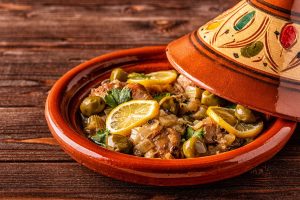
Chicken Tajine with Lemon and Olives
This is the most famous Moroccan tajine and a favorite among visitors. The chicken is slow-cooked with preserved lemons, green olives, garlic, onions, and spices such as ginger and turmeric. The result is a perfect balance between salty, citrusy, and savory flavors.
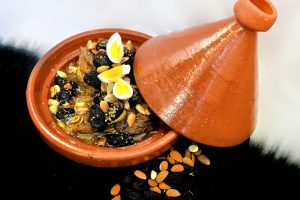
Lamb Tajine with Prunes and Almonds
A classic example of Morocco’s love for sweet-and-savory combinations. Tender lamb is cooked with prunes, almonds, cinnamon, and honey. This tajine is often served during celebrations and family gatherings.
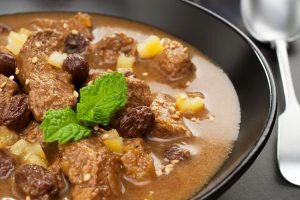
Beef Tajine with Apples or Raisins
Beef tajine offers a rich taste and is commonly paired with apples, raisins, or dates. The sweetness of the fruit contrasts beautifully with the spices and slow-cooked meat.
Fish and Seafood Tajines in Morocco
In coastal cities like Essaouira, Agadir, and Tangier, fish tajines are very popular.
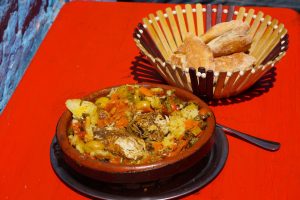
Sardine Tajine
Made with fresh sardines, tomatoes, peppers, potatoes, garlic, and chermoula (a traditional Moroccan marinade).
Tuna Tajine
Prepared with onions, tomatoes, olive oil, and spices, offering a lighter yet flavorful option.
Fish tajines are usually spicier than meat tajines and are especially popular during lunch.
Vegetarian Moroccan Tajine Options
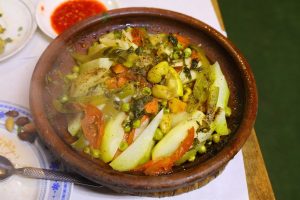
Moroccan tajine is extremely vegetarian-friendly. Thanks to the slow-cooking method, vegetables absorb spices beautifully.
Common ingredients include:
-
Chickpeas and lentils
-
Carrots, zucchini, potatoes, and tomatoes
-
Dates, apples, or dried apricots
-
Almonds and olive oil
Vegetarian tajines are widely available in Morocco and are often just as flavorful as meat-based ones.
How Moroccans Traditionally Eat Tajine
In Morocco, tajine is usually placed in the center of the table and shared. People eat directly from the dish using Moroccan bread (khobz) instead of cutlery.
Some cultural tips:
-
Tajine is often eaten with the right hand
-
Lunch is the most common time for tajine
-
Eating slowly is part of the experience
Trying tajine this way allows you to experience Moroccan hospitality at its best.
Tajine vs Couscous: What’s the Difference?
Many travelers wonder about the difference between tajine and couscous.
-
Tajine is a slow-cooked stew served hot directly from the clay pot.
-
Couscous is traditionally eaten on Fridays and consists of steamed semolina grains topped with vegetables and meat.
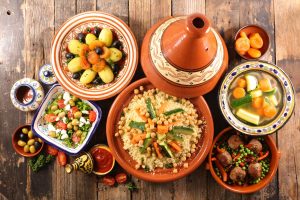
Both are iconic Moroccan dishes, but tajine is more commonly served in restaurants on a daily basis.
Where to Eat the Best Tajine in Morocco
You can find excellent tajine throughout the country, but the experience varies depending on the setting.
-
Local restaurants offer authentic flavors at affordable prices
-
Riads often serve homemade tajines using family recipes
-
Street food stalls provide simple but delicious options
-
Traditional markets (souks) are great places to discover regional variations
Trying tajine in different cities will allow you to taste how recipes change from one region to another.

Frequently Asked Questions About Moroccan Tajine
Is Moroccan tajine spicy?
Most tajines are flavorful rather than spicy. Chili can be added, but heat is usually mild.
Is tajine healthy?
Yes. Tajine is cooked slowly with little oil, making it a healthy and balanced meal.
Can vegetarians eat tajine in Morocco?
Absolutely. Vegetarian tajines are widely available across the country.
What meat is most common in Moroccan tajine?
Chicken and lamb are the most popular, followed by beef and fish.
Is tajine eaten every day in Morocco?
Yes. Many Moroccan families prepare tajine several times a week.
Why You Should Try Tajine When Visiting Morocco
The Moroccan tajine is more than food — it is a cultural experience. From the aroma of spices to the slow-cooked tenderness of the ingredients, tajine reflects Morocco’s traditions, climate, and way of life.
When traveling through Morocco, don’t hesitate to try different types of tajines, compare flavors, and ask locals for their favorite versions. It is one of the best ways to truly connect with Moroccan culture.
If you would like recommendations on where to eat authentic tajine during your trip, or want to combine food experiences with cultural tours, feel free to contact us — we will be happy to help you plan an unforgettable Moroccan journey.