Tetouan Morocco Travel Guide: While Marrakech and Fes pull in the crowds, Tetouan quietly holds one of the most intact and least commercialised medinas in the entire country. Tucked between the Rif Mountains and the Mediterranean, this whitewashed city — nicknamed the “White Dove” — carries a Spanish-Moorish soul unlike anywhere else in Morocco. This guide covers everything: its history, what to see, how to get there, and how to fit it into a wider northern Morocco trip.
Quick answer: Tetouan is a UNESCO World Heritage city in northern Morocco, about 65 km from Tangier and 60–90 minutes from Chefchaouen. Its medina, dating to the late 15th century, is considered one of Morocco’s most authentic. Two full days are enough to see the highlights.
Why Is Tetouan Called the “White Dove”?
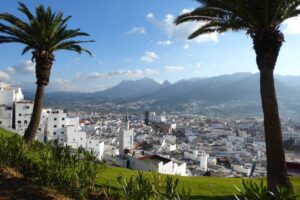
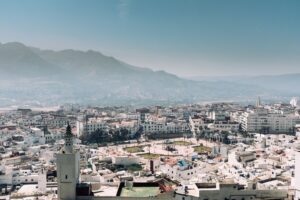
Tetouan earned its nickname from the way its whitewashed buildings cascade down the slopes of the Rif Mountains, gleaming against the green hillsides and the Mediterranean beyond. It’s also known as the “daughter of Granada,” a nod to the wave of Andalusian Muslims and Jews who fled Spain after the Reconquista in the late 15th century and rebuilt their lost homeland here — in architecture, cuisine, and craft.
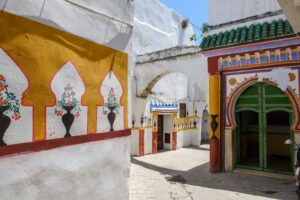
That Andalusian imprint is still the city’s defining character. Wrought-iron balconies, hidden courtyard gardens, and tiled Hispano-Moorish facades give Tetouan a completely different visual identity from the red-earth tones of Marrakech or the blue-washed lanes of neighbouring Chefchaouen.
The UNESCO Tetouan Medina: What to See
Tetouan’s medina was inscribed as a UNESCO World Heritage Site in 1997, and it’s widely regarded as one of the most complete and authentic in Morocco — a living neighbourhood rather than a tourist-oriented museum piece. For context on how it compares to Morocco’s other historic old towns, see our guide to old medinas in Morocco.
- Bab Al-Okla (the Crown Gate): one of the medina’s main entrances, and the classic starting point for exploring on foot.
- The souks: the medina is organised into specialised artisan quarters — weavers, jewellers, and leatherworkers each have their own section, where you can watch craftsmen at work rather than just buy the finished product.
- Place El Feddan: one of the city’s most beautiful public squares, framed by the Royal Palace.
- The Royal Palace and the School of Arts and Crafts: both showcase the refined Andalusian craftsmanship the city is known for, particularly its zellige tilework.
- The historic Jewish quarter (Mellah): a quieter corner of the medina with its own distinct architectural character. For wider context, see our guide to the Jewish Mellah in Morocco.
- Viewpoint near the Mosque of Sidi Tolha: one of the best elevated spots to see the white city spilling down toward the Mediterranean, with the Rif Mountains behind it.
Outside the medina walls, the Ensanche district shows off Tetouan’s Spanish colonial history — wide boulevards and elegant early-20th-century buildings that contrast sharply with the narrow medina alleys just steps away.
How to Get to Tetouan
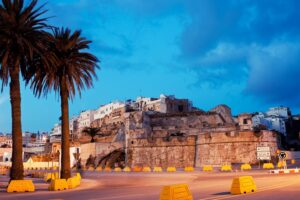
Tetouan sits conveniently along Morocco’s northern coast, making it an easy add-on to a Tangier or Chefchaouen itinerary rather than a destination you need to plan a special trip around.
- From Tangier: around 65 km, roughly a one-hour drive by grand taxi, bus, or private transfer.
- From Chefchaouen: around 60–90 minutes by road, making the two cities a natural combined stop. See our guide to getting to Chefchaouen for route options.
- By air: Tetouan has its own small airport (Sania R’mel), though most travellers fly into Tangier and continue overland.
If you’re planning to self-drive around the north, our driving in Morocco guide covers what to expect on the roads.
Beyond the Medina: Beaches and the Coast
Tetouan’s proximity to the Mediterranean is one of its biggest draws for a slower-paced visit. Martil, just a short drive away, offers a relaxed corniche and sandy beach popular with Moroccan families. A little further along the coast, Tamouda Bay stretches for around 15 km of fine sand, with a growing number of upscale resorts taking advantage of its clear blue water.
How Many Days Do You Need in Tetouan?
Two full days is enough to see the medina, the main squares, and the Ensanche district at an easy pace. Add a third day if you want to combine it with a beach afternoon in Martil or Tamouda Bay, or use it as a base for a Chefchaouen day trip. Many travellers instead treat Tetouan as a one-day stop between Tangier and Chefchaouen — which works well if time is tight, though it means rushing past a genuinely rewarding medina.
Good to know: Passports should be valid for at least 6 months, and most nationalities receive visa-free entry to Morocco for up to 90 days. See our guide to Morocco’s visa-free countries to check your own.
Combine Tetouan with the Rest of Northern Morocco
Tetouan works best as part of a wider northern loop. These guides can help you build the rest of the route:
Tangier to Marrakech
Complete travel guide by train, bus, flight, and car if you’re continuing south.
Tangier Historical City
Pair your Tetouan visit with Tangier’s own layered history and Mediterranean setting.
Ultimate Morocco Road Trip
Best routes and tips for exploring the north and beyond at your own pace.
Planning a Northern Morocco Trip?
Our family-run team can build a private route through Tetouan, Chefchaouen, and Tangier tailored to your dates and pace.
Frequently Asked Questions: Tetouan Morocco Travel Guide
Why is Tetouan called the White Dove City?
Because of its luminous, whitewashed buildings cascading down the slopes of the Rif Mountains, visible from a distance against the green hillsides.
Is Tetouan’s medina really a UNESCO World Heritage Site?
Yes, it was inscribed in 1997 and is considered one of the most complete and authentic medinas in Morocco.
How far is Tetouan from Tangier?
About 65 km, roughly a one-hour drive by taxi, bus, or private transfer.
How far is Tetouan from Chefchaouen?
Around 60–90 minutes by road, making the two cities easy to combine in one trip.
How many days should I spend in Tetouan?
Two full days covers the medina and main sights comfortably; add a third if you want to include a beach day in Martil or Tamouda Bay.
What makes Tetouan different from other Moroccan cities?
Its strong Andalusian influence, brought by refugees from Granada in the 15th century, gives it a distinct Spanish-Moorish character not found in cities like Marrakech or Fes.
Are there beaches near Tetouan?
Yes. Martil offers a relaxed corniche close by, and Tamouda Bay has around 15 km of sandy coastline with several resorts.
Is Tetouan touristy?
Not really — compared to Marrakech or Fes, Tetouan sees far fewer visitors, and its medina still functions as a genuine, lived-in neighbourhood rather than a tourist attraction.