Is Morocco Safe for Americans? Yes — Morocco is safe for Americans, and hundreds of thousands of US travellers visit every year without incident. But if you’ve searched this question, you’ve probably also seen the words “Level 2 travel advisory” and “terrorism” attached to Morocco, which understandably gives people pause. This guide explains exactly what that advisory means, how real the risks actually are on the ground, and what practical precautions are worth taking — without the scare-tactic headlines or the false reassurance.
Quick answer: Morocco carries a Level 2 “Exercise Increased Caution” advisory from the US State Department, the same category as popular destinations like France and Germany. The vast majority of visits are trouble-free; the main real-world risks are petty theft and scams, not terrorism.
Is Morocco Safe for Americans?
As of its most recent update, the US State Department places Morocco at Level 2: Exercise Increased Caution, on a scale that runs from Level 1 (normal precautions) to Level 4 (do not travel). The advisory cites the ongoing possibility of terrorism, noting that groups continue plotting potential attacks and that tourist locations, transportation hubs, markets, and government facilities are the type of places that could be targeted.
Context matters here. Level 2 is a broad, common category — it’s the same level currently assigned to countries like France, Germany, and the United Kingdom, all of which welcome tens of millions of American tourists annually. It is not a warning to avoid travel; it’s a request to stay situationally aware, the way you’d naturally behave in any major city.
Official source: Always check the current advisory before you fly, as it’s reviewed and updated periodically: travel.state.gov – Morocco Travel Advisory.
Morocco has not experienced a major terrorist attack targeting tourists in over a decade. The country invests heavily in tourism security, with a dedicated tourist police force (Brigade Touristique) stationed in the medinas of Marrakech, Fes, and other major destinations.
What Americans Actually Run Into: Real Risks vs. Overblown Ones
Terrorism dominates the headline advisory language, but it’s not what trips up the average American visitor. Here’s what’s actually worth planning around:
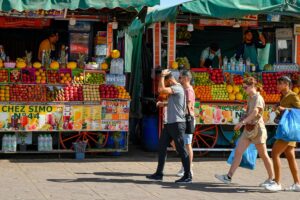
- Petty theft and pickpocketing: the most common real issue, concentrated in crowded medinas and markets, particularly Marrakech and Fes. Keep bags zipped and valuables out of back pockets.
- Overcharging and unofficial guides: unsolicited “guides” in the medina, inflated taxi fares, and pressure tactics in shops are common annoyances rather than dangers. Agree prices upfront and it’s easily avoided. See our full guide on scams in Morocco.
- Road safety: driving standards and road conditions vary, especially in mountain and desert areas. If you’re self-driving, see our driving in Morocco guide first.
- Food and water: stick to bottled or filtered water and be cautious with street food hygiene, particularly in the first few days as your system adjusts.
- Terrorism: a background possibility acknowledged by the advisory, but not something that has materialized against tourists in recent years. Standard vigilance in crowded public places is the sensible response, not avoidance.
For women travelling independently, unwanted attention in busy areas is the most frequently reported friction point rather than serious danger. Our dedicated guide on solo female travel in Morocco covers this in detail, and our broader solo travel Morocco guide applies to all solo travellers.

Is It Safe to Visit After the 2023 Earthquake?
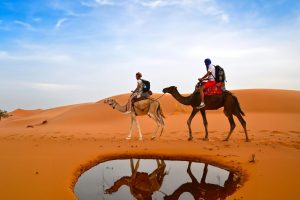
Yes. The September 2023 High Atlas earthquake affected rural villages in areas like Amizmiz and the Ourika Valley, and reconstruction has been extensive since. Marrakech itself, the desert routes to Merzouga and Zagora, and the main tourist circuits were largely unaffected and have been operating normally for some time. Visiting the affected mountain communities today, through licensed operators, also directly supports the local economy. Read our full breakdown: Is It Safe to Go to Marrakech After the Earthquake?
Entry Requirements & US Embassy Information
US citizens can enter Morocco visa-free for tourism stays of up to 90 days, provided your passport has at least six months of validity remaining and a blank page for the entry stamp. For the full picture, see our guide to Morocco’s visa-free countries.
Before you travel, it’s worth enrolling in the State Department’s free Smart Traveler Enrollment Program (STEP), which sends safety alerts and helps the embassy locate you in an emergency. The US Embassy is located in Rabat, with a consular agency in Casablanca. Keep this information on hand:
US Embassy Rabat: Km 5.7, Avenue Mohamed VI, Souissi, Rabat 10170, Morocco
Website: ma.usembassy.gov
Practical Safety Tips for American Travellers
- Enroll in STEP before you fly and keep the embassy address saved on your phone.
- Stay alert in crowded tourist areas, transport hubs, and markets, especially during religious holidays when crowds swell.
- Use licensed guides and registered tour operators, particularly for desert trips and mountain excursions.
- Buy comprehensive travel insurance that covers medical evacuation — see our guide to travel insurance for Morocco.
- Avoid demonstrations and large public gatherings, even peaceful ones, as a general precaution.
- Carry a photocopy of your passport and keep the original secured separately.
Bottom line: Morocco welcomes millions of Western tourists a year, tourism is a cornerstone of its economy, and the government has strong incentive to keep visitors safe. Treat it with the same everyday awareness you’d bring to any major international city, and you’ll likely have zero safety issues.
Ready-Made Morocco Itineraries
Planning with a licensed local operator is one of the simplest ways to minimize risk while getting the most out of your trip. These guides map out complete routes:
7-Day Morocco Itinerary
A complete one-week route covering the desert, cities, and mountains.
2 Weeks in Morocco
The full 14-day route for travellers who want to see the whole country without rushing.
Best Small Group Tours to Morocco
Travelling with a licensed group is one of the simplest ways to stay safe while exploring more.
Planning Your Trip from the US?
Our family-run, licensed team designs private and small-group tours across Morocco, with local guides who know the safest routes and times to travel.
Frequently Asked Questions
Is Morocco safe for Americans right now?
Yes. Millions of tourists, including large numbers of Americans, visit Morocco every year without incident. The country carries a Level 2 US advisory, the same category as France and Germany.
What does the Level 2 travel advisory for Morocco mean?
It means the State Department advises Americans to exercise increased caution, mainly citing the possibility of terrorism. It is not a recommendation to avoid travel.
What is the biggest safety risk for tourists in Morocco?
Petty theft and overcharging scams in busy medinas are far more common than any serious security threat.
Do US citizens need a visa to visit Morocco?
No. US citizens can enter Morocco visa-free for tourism stays of up to 90 days with a valid passport.
Is it safe to visit Marrakech after the 2023 earthquake?
Yes. Marrakech and the main tourist routes were largely unaffected and have been operating normally, while the rural mountain areas that were hit have undergone extensive reconstruction.
Is Morocco safe for solo female travellers from the US?
Generally yes, with unwanted attention in busy areas being the most common issue rather than serious danger. See our dedicated solo female travel guide for practical tips.
Should I register with the US Embassy before travelling to Morocco?
It’s recommended. Enrolling in the free STEP program lets the embassy send you safety alerts and helps locate you in an emergency.
Is it safe to drink tap water in Morocco?
Bottled or filtered water is recommended for most travellers, particularly in the first few days, to avoid stomach upset.