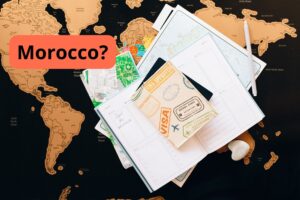
Morocco National Tourism Office, planning a trip to Morocco involves navigating a range of information sources — from travel blogs and guidebooks to official government resources and national tourism offices. Knowing where to find authoritative, up-to-date official information is important for anything visa-related, entry requirements, and the official picture of what Morocco is offering as a destination. This guide covers Morocco’s official national tourism authority, where to find it, what it offers, and how to use official resources effectively alongside the practical, on-the-ground knowledge that only local experience can provide.
⚡ Morocco Tourism — Official Contact Points
- National tourism authority: Office National Marocain du Tourisme (ONMT)
- Official Morocco tourism website: www.visitmorocco.com
- ONMT headquarters: 31, Avenue Al Abtal, Agdal, Rabat, Morocco
- Ministry of Tourism: Ministry of Tourism, Handicraft, Air Transport and Social Economy, Rabat
- Morocco entry requirements (US travellers): US Embassy Morocco
- Morocco entry requirements (UK travellers): UK FCDO Morocco Travel Advice
- Morocco entry requirements (Australian travellers): Smartraveller Morocco
- Morocco entry requirements (Canadian travellers): Government of Canada Morocco
- Official visa information: Moroccan Ministry of Foreign Affairs
What Is the Morocco National Tourism Office (ONMT)?
The Office National Marocain du Tourisme — known internationally as the ONMT or the Moroccan National Tourist Office — is the official government body responsible for promoting Morocco as a travel destination worldwide and for providing authoritative tourist information both within Morocco and through its network of international representative offices. It operates under the Moroccan Ministry of Tourism and is the primary official source for destination information, statistics, and tourism policy.
The ONMT’s international reach has expanded significantly over the past decade as Morocco has grown into one of Africa’s most visited countries — attracting over 14 million international visitors annually before 2020 and recovering strongly post-pandemic. The authority’s official tourism portal, visitmorocco.com, is the most comprehensive official resource for destination content, and is published in multiple languages including English, French, Arabic, Spanish, and German.

Morocco Tourism Office Locations: International Offices
The ONMT maintains representative offices in key markets around the world, providing official tourist information, brochures, and liaison services for travel agents and visitors. Here are the primary international offices:
🌍 ONMT International Tourism Offices
- France (Paris): 161, rue Saint-Honoré, 75001 Paris — Tel: +33 1 42 60 63 50
- Spain (Madrid): Calle Quintana 2, Piso 4, 28008 Madrid
- United Kingdom (London): 205 Regent Street, London W1B 4HB
- Germany (Frankfurt): Göthestraße 33, 60313 Frankfurt am Main
- United States (New York): 104 West 40th Street, Suite 510, New York, NY 10018
- Canada (Montreal): 1255 Rue Peel, Suite 102, Montreal, QC H3B 4V4
- Italy (Rome): Via Lazio 20, 00187 Rome
- Netherlands (Amsterdam): Leidsestraat 62, 1017 Amsterdam
- Scandinavia (Sweden/Stockholm): Regional representative office
- UAE (Dubai): Regional representative for Gulf markets
- China (Beijing): Regional representative for Asian markets
Note: Office locations and availability are subject to change. Always verify current contact details via visitmorocco.com before visiting in person.
Tourist Information Offices Inside Morocco
Within Morocco itself, the ONMT operates or oversees tourist information offices (Délégations Régionales du Tourisme) in each of Morocco’s major cities and tourist destinations. These offices provide maps, brochures, accommodation lists, and general visitor information:
- Marrakech: Place Abdelmoumen Ben Ali, Gueliz — near the central post office
- Casablanca: 55, rue Omar Slaoui, downtown Casablanca
- Fes: Place de la Résistance (Mohammed V Square), Fes Ville Nouvelle
- Agadir: Avenue Mohammed V, Agadir city centre
- Tangier: 29, Boulevard Pasteur, Tangier centre
- Meknès: Place Administrative, Meknes Ville Nouvelle
- Rabat: Angle rue Al Abtal et Avenue Mohammed V, Agdal
- Essaouira: 10, rue du Caire, Essaouira medina adjacent
- Ouarzazate: Avenue Mohammed V, Ouarzazate centre
- Tetouan: 30, Boulevard Mohammed V, Tetouan
Tourist information offices in Morocco are typically open Monday–Friday, 8:30am–4:30pm. Hours may vary during Ramadan and public holidays.
What Official Morocco Tourism Resources Can Help With
Official ONMT resources and government travel advisory pages are most useful for specific categories of pre-trip planning:
Entry Requirements and Visa Information
Visa requirements for Morocco vary by nationality, and the official source for current, accurate visa information is either the Moroccan Ministry of Foreign Affairs website or your own country’s foreign affairs department. Most nationalities from Western Europe, North America, and Australasia enter Morocco visa-free for 90 days — but requirements can change, and the official source is always the most reliable reference. Our dedicated Morocco visa guide summarises current requirements by major nationality.
Official Destination Content
The visitmorocco.com portal provides authoritative destination content on Morocco’s regions, cities, UNESCO sites, and cultural heritage — useful for initial orientation and for understanding how Morocco presents itself as a destination. The site is well-produced, multilingual, and regularly updated with event calendars and seasonal content.
Tourism Statistics and Morocco’s Tourism Sector
For anyone researching Morocco’s tourism industry — journalists, researchers, travel professionals — the ONMT publishes annual tourism statistics and sector reports. These cover visitor numbers by nationality, receipts, accommodation capacity, and sector growth. Our own Morocco tourism statistics guide summarises the key figures in accessible form.
Health and Safety Information
For current health advisories, entry conditions, and safety ratings, your home country’s official travel advisory is more useful than the ONMT’s own materials (which will naturally present the most positive picture). US travellers should consult the US Embassy Morocco page. UK travellers, the FCDO Morocco travel advice. Australian travellers, Smartraveller. Canadian travellers, the Government of Canada Morocco page. Our own Morocco safety guide provides an honest, experienced-local perspective on what the official advisories mean in practice.
Beyond the Official Guide: What Tourism Offices Can’t Tell You
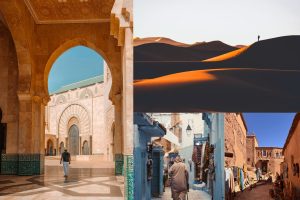
Official tourism resources are excellent at certain things — destination overview, visa information, official event calendars, UNESCO site information. They are naturally less useful for the kind of honest, granular, experiential knowledge that makes the difference between a good Morocco trip and an extraordinary one:
- Which specific riad in Marrakech’s medina has the best rooftop for sunset and also has a pool that is actually clean and heated
- What time of day the Chouara Tanneries in Fes look best and which leather shop balcony gives the highest, unobstructed view
- How to tell whether the argan oil you are buying in a souk is genuine food-grade argan or a diluted cosmetic substitute being sold as food
- Which desert camp at Merzouga positions you optimally for the sunrise angle and furthest from the neighbouring camps
- What the souk actually smells and sounds like in the early morning before the tourist hour begins
This is the knowledge that local families, experienced guides, and the accumulated content of a trusted specialist site provide — and it complements the official resources rather than replacing them. The most successful Morocco trips combine official entry and safety information with the kind of on-the-ground detail that only genuine local knowledge delivers.
Morocco’s Tourism Vision 2030: What’s Coming
Morocco’s Ministry of Tourism has an active development agenda built around two major milestones: the 2025 Africa Cup of Nations (which Morocco is hosting) and the 2030 FIFA World Cup, which Morocco is co-hosting with Spain and Portugal. Both events are driving major infrastructure investment — new and expanded airports, improved road connections, hotel capacity increases, and the development of new tourism zones particularly in the south and along the Atlantic coast.
For travellers, this means Morocco in the next few years will see meaningful transport and accommodation quality improvements, particularly in secondary cities and Sahara-adjacent areas. It also means that 2030 specifically will be an extraordinarily high-demand period for Morocco tourism — those planning trips around the World Cup should book years in advance. Our Morocco 2030 World Cup guide and Morocco Africa Cup guide cover both events in full.
Morocco UNESCO World Heritage Sites: The Official List
Morocco has nine UNESCO World Heritage Sites — one of the highest concentrations in Africa — and the official UNESCO listing is the authoritative reference for each:
- Medina of Fes — Inscribed 1981 (world’s largest living medieval Islamic city)
- Medina of Marrakech — Inscribed 1985
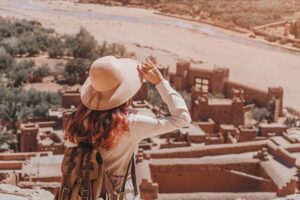
- Ksar of Ait-Ben-Haddou — Inscribed 1987 (Morocco’s most photographed building complex)
- Historic City of Meknes — Inscribed 1996
- Archaeological Site of Volubilis — Inscribed 1997 (best-preserved Roman ruins in North Africa)
- Medina of Tétouan — Inscribed 1997
- Medina of Essaouira — Inscribed 2001
- Portuguese City of Mazagan (El Jadida) — Inscribed 2004
- Rabat, Modern Capital and Historic City — Inscribed 2012
Our dedicated site guides cover each of these in detail: the Ait Ben Haddou guide, the Volubilis guide, and the El Jadida guide provide the practical, experiential detail to complement the official UNESCO designations.
Morocco Tourism Key Contacts Quick Reference
📋 Essential Official Morocco Contacts for Travellers
- Morocco official tourism portal: visitmorocco.com
- Moroccan Ministry of Foreign Affairs (visa info): diplomatie.ma
- Morocco train booking (ONCF): oncf.ma
- Morocco bus booking (CTM): ctm.ma
- Royal Air Maroc (national carrier): royalairmaroc.com
- Emergency number in Morocco: 190 (Police) / 150 (Medical) / 177 (Gendarmerie)
- US Embassy Rabat: +212 537-637-200
- UK Embassy Rabat: +212 537-633-333
- Australian Embassy Rabat: +212 537-671-060
- Canadian Embassy Rabat: +212 537-687-400
Planning Your Morocco Trip: Official + Local Knowledge
The best Morocco trip planning combines both sources of information effectively. Use official resources for:
- Confirming current visa and entry requirements for your specific nationality
- Checking your home country’s current travel advisory level for Morocco
- Finding official UNESCO site information and opening hours
- Registering your trip with your home country’s consular notification system
- Booking trains and buses through official national platforms
And use local expertise — a specialist tour operator, an experienced guide, or a site like this one — for everything else: which specific experiences are worth the investment, which route makes the most sense for your particular dates and interests, how to navigate the souk with confidence, what Morocco actually costs in 2026, and how to build a trip that goes beyond what any brochure could capture. Our how to plan a Morocco trip guide integrates all of this into one complete framework.
Ready to Plan Your Morocco Trip?
Official resources tell you Morocco is worth visiting. We can tell you exactly which riad, which guide, which camp, which route, and which morning light makes it unforgettable. We are a Berber family from Morocco — this is our home, and we know it completely.
Talk to a Local Morocco Specialist →
We reply within 24 hours · No obligation · Free itinerary advice