The traditional clothing of Morocco:
Traditional Clothing & Moroccan dress: a Stunning Display of History, Culture, and Art of traditional Moroccan garment
Located between Africa and the Arab world, the Kingdom of Morocco has a complex cultural past that is reflected in its attire. The complex and colourful clothing of the Moroccan people has been a source of pride and a means of expressing their cultural identity for ages. Alluring in its rich tapestry of colour, texture, and meaning, traditional Moroccan dress provides a window into the country’s people and their longstanding customs.
Historical Background:
Traditional Moroccan dress has its origins in the region’s indigenous Berber cultures, which date back millennia. Arab, Andalusian, Ottoman, and sub-Saharan influences on the country’s clothing throughout the years. The resulting tapestry of traditional Moroccan dress is as varied and fascinating as the cultures from which its components were woven.
Differences by Region
Traditional dress in Morocco reflects the country’s rich cultural variety. The local culture, climate, and resources all play a role in shaping the distinctive aesthetics of each geographical area. The following are examples of significant geographical differences:
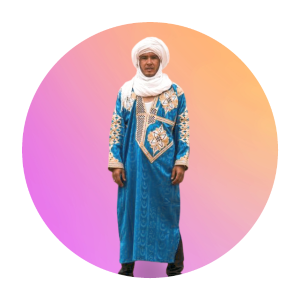
The Jellaba: a traditional garment of Morocco, is a symbol of the country’s history and culture. The origins of this loose, hooded robe may be traced back to the clothing of ancient Berber tribes, however, it has changed throughout the years to include new styles and inspirations. Because of its large hood, loose fit, and bright colours, the Jellaba is easily identifiable and appreciated by Moroccans and admirers throughout the globe. The Jellaba is worn not just as a means of keeping warm and dry, but also as part of religious and cultural rituals and during family reunions. Its attractiveness is rooted in its Moroccan roots, where it serves as a proud representation of the country’s valued traditions and identity, and its ageless beauty has earned it worldwide acclaim.
Kaftan: The Kaftan, often spelt “Keftan,” is a traditional garment worn in Morocco that is both beautiful and comfortable. This long robe, which ends at the ankle, has been worn by people of many different civilizations for many years. The traditional Moroccan kaftan was initially inspired by Persian and Ottoman forms, but it has since developed to express the distinct cultural character of Morocco. It has evolved into a highly prized article of clothing worn by modern ladies for important events including weddings, religious celebrations, and formal gatherings. The luxurious fabrics, lavish needlework, and intricate decorations that give the Kaftan its charm are the work of skilled Moroccan tailors and embroiderers. Whether it’s decorated with classic themes or cutting-edge designs, the Kaftan from Morocco is a timeless emblem of elegance and beauty.
The Takchita: a traditional clothing of Morocco, is a gorgeous two-piece outfit that exudes beauty and sophistication. The Takchita, which consists of a dress worn over a second, more fitting garment, is a popular option for Moroccan women to wear to weddings and other formal events. The gorgeous stitching fine beaded, and opulent decorations on this set are a testament to the skill and artistry of Moroccan tailors. Differentcolourss and patterns on the Takchita have different meanings. It gracefully fuses conventional conventions with contemporary fashion trends, enabling women to exhibit their sense of style while honouring their heritage. The Takchita from Morocco is a proud representation of the country’s illustrious history and sartorial prowess, and its ageless beauty never ceases to enchant.
EL hAIK: The traditional Moroccan haik is a garment that exemplifies these qualities in design. The Haik is a traditional cloak used by women in the northern parts of Morocco. It is thin and airy, making it comfortable to wear even in hot weather. This rectangular piece of fabric is worn draped over the body and fastened at the waist to provide full body coverage. The Haik’s functional style does double duty by protecting its wearer from the sun and wind while also giving her some much-appreciated personal space. Although the Haik may look simple at first sight, it is sometimes embellished with fine embroidery and fringes that provide itwith a refined air. The Moroccan Haik has been passed down from generation to generation and has been crucial in maintaining the region’s cultural identity, despite the prevalence of Western influences.
Amazigh Clothing:
The indigenous Berber people of North Africa wear a wide variety of colourful and intricate garments known together as Amazigh apparel. The traditional Moroccan garment of the Amazigh people reflects their deep cultural roots and lengthy history. Across the many diverse Amazigh tribes and locations, there is a broad range of clothing designs, colours, and patterns, each with its symbolic meaning.
The vibrant and striking colours used in Amazigh apparel, which are generally derived from plant-based natural dyes, are a hallmark of the Berber people and their culture. Amazigh clothing is also characterized by the use of geometric designs, elaborate needlework, and handwoven materials, all of which attest to the expertise of the artists who make them.
The women’s “Takchita” and the men’s “Jelaba” share their names with traditional Moroccan garments but have evolved into styles that are uniquely Amazigh. In addition to the “Tizab” headgear, women may also wear the “Haik,” a long, flowing cloak reminiscent of the “Haik” worn in Morocco.
The clothes an Amazigh wears are more than just a symbol of their heritage; they also convey information about their age, marital status, and social standing. Festive garb is often more ornate and made of higher-quality materials than what is typically worn daily.
Many Amazighs still take pride in wearing traditional dress, passing it down through the generations despite the prevalence of contemporary culture. Amazigh Traditional Moroccan garment is an integral part of North Africa’s cultural tapestry since it is a means by which the Amazigh people respect their ancestors and pay tribute to the continuing spirit of their culture.
Meaning and Symbolic Expression
Cultural, social, and religious views are all reflected in the meaning and importance of traditional Moroccan dress. The wearer’s identity, the event, and the wearer’s social position may all be inferred from the garment’s colour, pattern, and design. Some of the most prominent meanings and symbols associated with traditional Moroccan dress are as follows:
1. Colors: The various hues worn by Moroccans convey various meanings. White is often worn at religious rituals because of the meanings it represents: purity and spirituality. Islam and the natural world share a love of the colour green since it symbolizes prosperity and new life. The colour blue is often used in Morocco because of the widespread belief that it helps ward off the evil eye. The symbolic significance of clothing is enhanced by the fact that each hue represents something different.
2. The elaborate embroidery and designs on traditional Moroccan garments have deeper cultural and historical significance than their surface ornamentation. Diamonds and triangles, and other geometric patterns, have their roots in Berber traditions, where they serve as symbols of tribal identity. Floral patterns are very popular, and they often represent femininity, development, and beauty.
3. Fabrics: In the traditional clothing of Morocco, the fabric chosen might indicate the event and the wearer’s social rank. Fabrics like silk, satin, and velvet are often reserved for more formal occasions when money and status are being shown. Cotton and wool are preferred for casual clothes because of their durability and warmth.
4. Belts and Buttons: The belts and buttons on traditional Moroccan clothes serve as more than simply practical accessories; they also have significant cultural meaning. Belts denote refinement and elegance by cinching the clothes to produce a pleasing form, and the number of buttons on a garment may be used as a proxy for the wearer’s socioeconomic standing.
5. Hoods and headdresses: the hoods on items like the Jellaba not only keep the wearer warm and dry but also give them an aura of mystery. The “Tizab” and “Tahruyt,” two types of traditional women’s headdresses, each have regional variants that might denote a woman’s marital status and community membership.
6. There are special events at which various traditional garments from Morocco are worn. In contrast to the Jellaba, which is worn daily, the Kaftan and Takchita are only worn on special occasions like weddings. The Moroccans have a long-standing custom of dressing correctly for all special occasions, and the variations in clothing serve to highlight the cultural significance of these events.
The traditional clothing of Morocco is more than simply trendy threads; it is an expression of Morocco’s cultural values, social norms, and deep historical origins. Stories of tradition, spirituality, and community are conveyed via the garments’ intricate symbolism and meaning. The symbolism of traditional Moroccan garments is an ever-present connection to the past and a source of pride in the country’s rich cultural legacy, even as Moroccans continue to celebrate their traditions and embrace modernity.
Daily Life in Traditional Garb
The traditional garment in Morocco remains significant and is used as a means of displaying cultural pride and identity. The traditional clothing of Morocco is still worn every day, especially in rural areas and for special events, even though Western-style clothing has grown increasingly popular in urban areas, especially among the younger population. The following are examples of how traditional Moroccan attire is used:
1. One of the most popular urban traditional clothes is the loose-fitting hooded robe known as the Jellaba. It’s a sensible option since it shields you from the heat of the sun and the chill of the wind. The Djellaba, a similar robe often made of wool, is popular in rural areas, particularly during the winter months, because of its warmth and comfort.
2. The Amazigh people, who are part of the Berber culture, still wear their traditional dress today. The women of this area are known for their colourful clothes and elaborate needlework. Men may feel free to dress in traditional garb-like tunics and turbans.
3. During festivals and religious occasions, Moroccans take great delight in wearing their most elaborate traditional garments. People wear their finest Kaftans, Takchitas, and Jellabas to special events including weddings, religious holidays, and cultural festivals. This custom serves to both honour their history and bring the group closer together.
4. Traditional garb in certain rural regions is functional workwear, tailored to a variety of occupations. Women often wear Haik or other loose-fitting clothing while working in the fields or around the home.
5. Urban areas have seen the emergence of a new style of dress that fuses elements of several cultures. To produce their unique and attractive designs, fashion designers and craftspeople sometimes combine old techniques with the latest in modern fashion. Moroccans can celebrate their unique culture while still embracing modernity because of this synthesis of the two.
6. The local economy relies heavily on the creation and selling of traditional clothes made by skilled artisans. Traditional clothing is often adorned with embroidery and other decorations that need the ability of artisans, especially women. This skill is handed down from generation to generation, which helps sustain cultural norms and local economies.
7. Putting on traditional garb daily is more than simply a fad; it’s a statement about who you are and your relationship to Morocco. It’s a way to celebrate Morocco’s many cultural traditions and instil a feeling of national pride.
traditional Moroccan dress is still widely worn today. These garments are important symbols of Moroccan origin and identity. The traditional clothing of the Moroccan people is highly valued and celebrated by the country’s citizens today, whether for everyday use, ceremonial events, or to display the country’s creative skill.
Celebrations of Love and Life
The traditional clothing of Morocco plays a key part in the festivities during Moroccan weddings, which are otherwise lavish and joyful gatherings. The Takchita is a traditional wedding garment worn by the bride, and it is known for its elaborate embroidery, sequins, and beads. The groom might show off his refined sense of style with a Jellaba or a Kaftan.
Moroccans take great delight in dressing in their most elaborate traditional garb for festivals and religious ceremonies. Celebrations of religion and tradition like this provide people with a wonderful chance to express their unique cultural backgrounds and identities.
Keeping the Past Alive in the Present
Traditional dress is part of Morocco’s rich cultural legacy that is increasingly at risk as the country adapts to modernity and globalization. Traditional weaving, stitching, and dying methods have been the focus of efforts to preserve and rejuvenate the art form. To further ensure that the history of Moroccan dress is perpetuated in current fashion, designers and craftspeople are combining traditional features into new creations.
The traditional clothing of Morocco is an enthralling display of the country’s rich artistic, historical, and cultural traditions. It’s a reminder of the country’s complicated history in addition to being a means of self-expression and social standing. In an ever-evolving world, Moroccans continue to express their cultural heritage via brilliant colours, complex needlework, and distinctive patterns, passing on their traditions to future generations. By doing so, they create a tapestry of beauty and identity that represents who they are as a country and serves as a source of national pride.